
From home dialysis to earthquake safety: BiDaKidney and Sentinel advance to the final stage of the international design competition, bringing locally rooted solutions for safer dialysis treatment at home and smarter buildings to the global stage
BiDaKidney and Sentinel have advanced to the James Dyson Award 2026 Global Top 20, placing two Philippine inventions among this year’s most promising problem-solving designs from around the world.
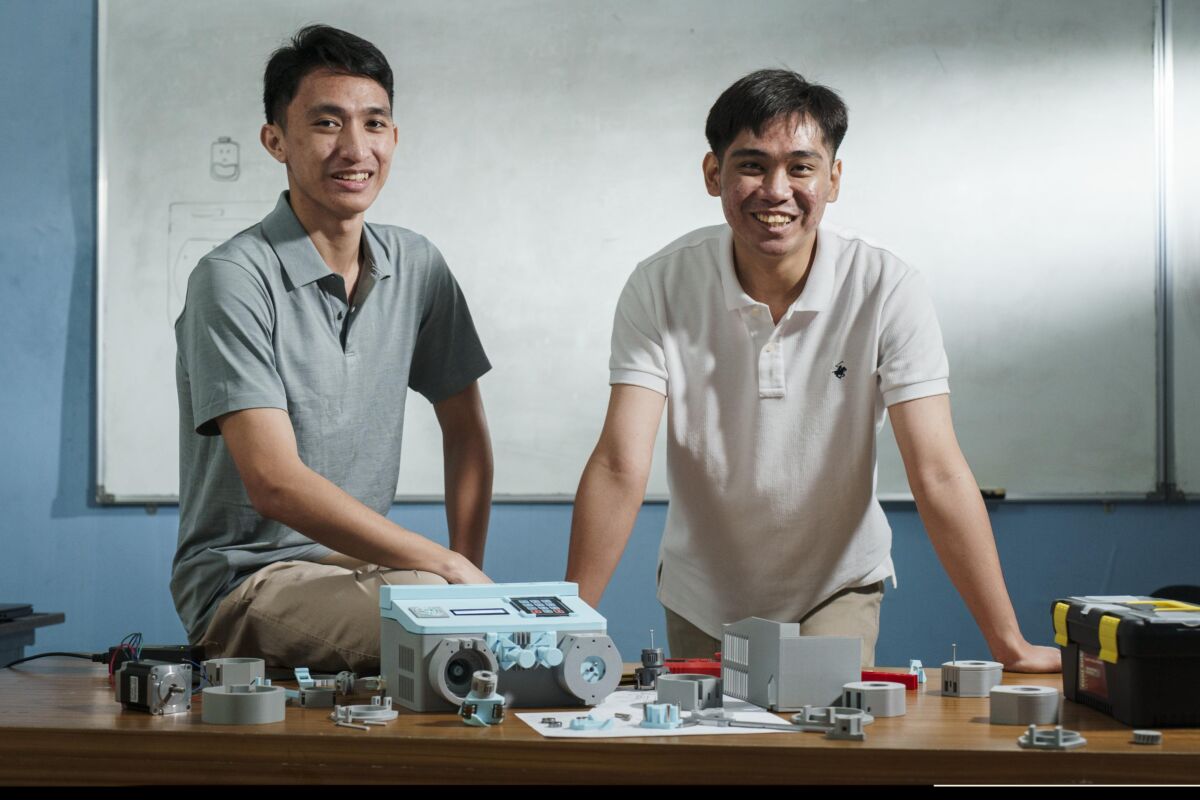
Created by University of the Philippines Diliman graduates Andrew Jacob Buensalido and Allyson Cabrestante, BiDaKidney is a low-cost, semi-automated peritoneal dialysis (PD) machine designed to make home-based treatment simpler, safer, more accessible, and more affordable.
Developed by De La Salle University graduate Aldrei Ong, Sentinel transforms an ordinary concrete spacer block into a sensor that produces measurable electrical signals when concrete is damaged, enabling earlier, remote detection of structural issues.
Both inventions will now progress to the final stage of judging, where they will be reviewed by Sir James Dyson for a chance to win PHP2,390,230 to support their further development and commercialization.
The recognition marks the first time two Philippine entries have reached the Award’s Global Top 20, placing Filipino design and engineering in the global spotlight. It shows young Filipino inventors can create innovative solutions that not only make a meaningful difference in local communities but also stand alongside the world’s most promising innovations.
BIDAKIDNEY: MAKING HOME-BASED DIALYSIS SAFER, EASIER, AND MORE ACCESSIBLE
Dialysis is becoming a reality for more Filipinos: 64,845 people received treatment in 2024, up 22 percent from 53,296 in 2023. For patients, families, and caregivers managing peritoneal dialysis at home, treatment can bring the daily burden of several tube exchanges, close fluid monitoring, and manual record-keeping, steps that can be tiring and increase the risk of contamination.
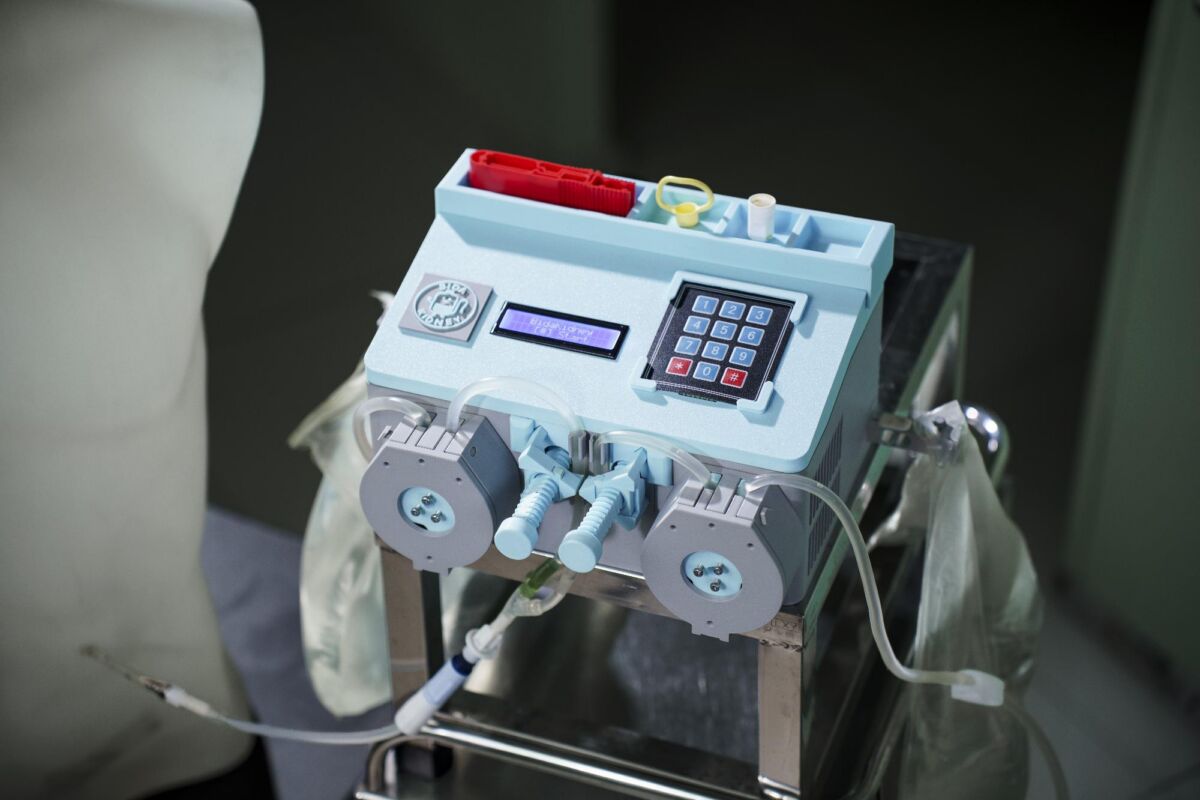
BiDaKidney automates key parts of PD while working with standard supplies patients already use. A controlled pump moves dialysis fluid through the tubing, built-in weight sensors track how much fluid is transferred, and a dual-tube clamp directs the flow to help prevent leaks and backflow.
The idea took shape after Andrew’s older sister, a healthcare provider at a government hospital, spoke about the conditions patients faced during dialysis. Over two semesters, Andrew and Allyson moved from drawings and 3D models to a working prototype, refining the pump, sensors, clamp, and control system through repeated testing.
Andrew and Allyson said: “Seeing BiDaKidney reach the Global Top 20 is something we once only imagined; it feels incredible that this has become reality! Beyond the award itself, we are grateful for what this recognition brings: the opportunity to spotlight the difficult realities patients and families face in managing dialysis, and to build connections with the people who can help us make those realities less difficult.”
SENTINEL: ENABLING EARLIER DETECTION OF STRUCTURAL DAMAGE

A major earthquake in Metro Manila could leave around 34,000 people dead, more than 100,000 injured, and over 170,000 homes collapsed. After the shaking stops, thousands of buildings would still need to be checked before families, students, workers, and patients can safely return. Because engineers must often assess each site through visual inspections or physical tests, confirming damage can take days or longer and can be expensive. This creates a critical information gap that delays reopening and leaves hidden structural risks undetected.
For Aldrei, Sentinel began with a simple observation: while buildings are equipped with systems that detect threats such as fire and smoke, there is often no similarly accessible way to continuously monitor their structural condition. This led him to explore how an everyday construction component could double as an early indicator of damage.
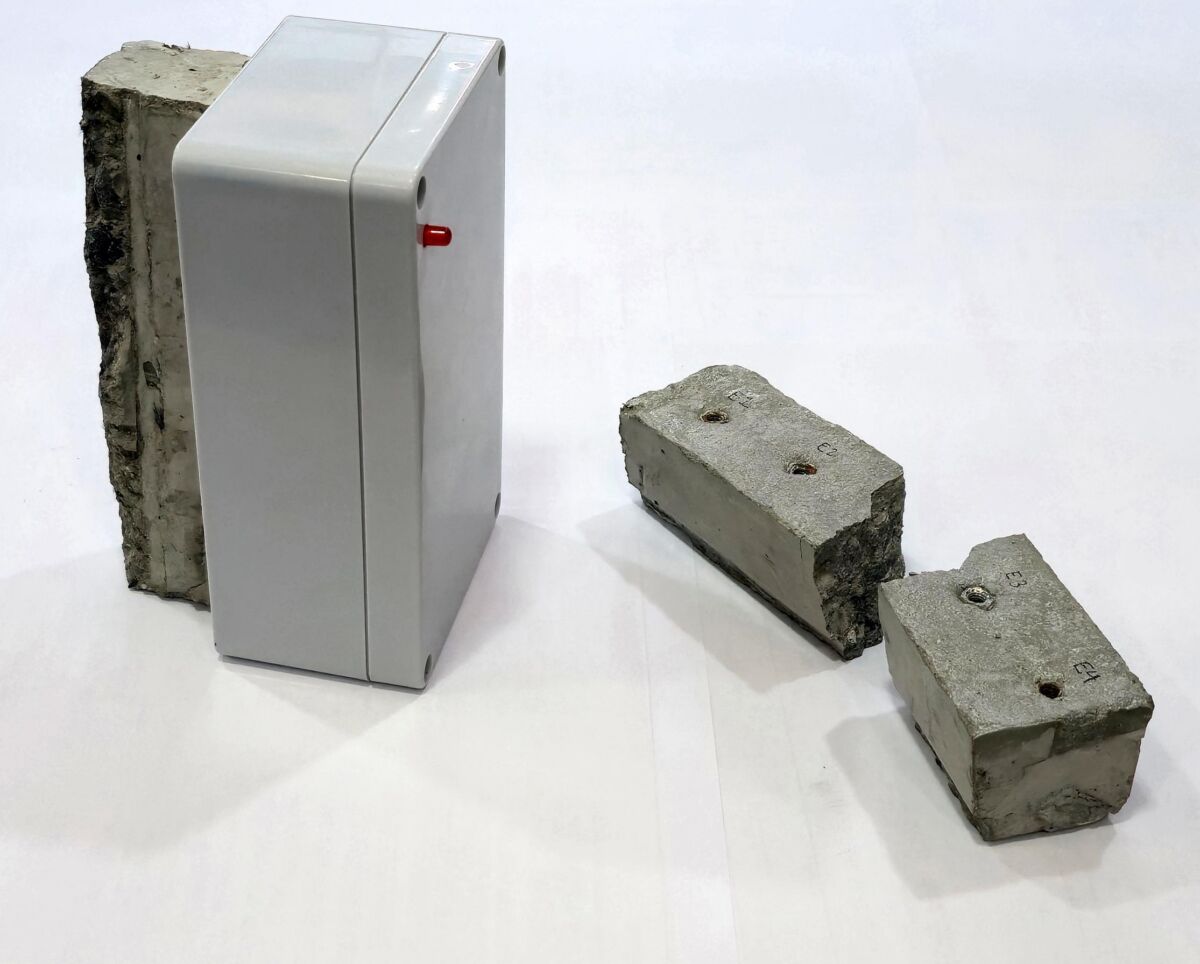
Sentinel is a concrete spacer block made from self-sensing concrete that shortens the gap between damage occurring and someone knowing about it. Aldrei shaped the sensor as a concrete spacer block so it could fit into existing construction practices. Conductive materials create electrical pathways inside the block, and damage causes changes in the electrical signal. Embedded electrodes connect the block to a compact device that compares each reading and sends significant changes remotely to an online dashboard, giving engineers earlier notice that part of a structure may need closer inspection.
With an estimated manufacturing cost of only PHP10 (USD0.15) per block, Sentinel is designed to make structural sensors a practical feature across more buildings, giving owners earlier information that can help reduce repair costs and occupants greater confidence in their safety. This potential is already being tested beyond the laboratory, with self-sensing spacer blocks embedded in the St. Margaret Mary Alacoque building of the National Shrine of the Sacred Heart for field monitoring.
Aldrei said: “Living in an earthquake-prone country means structural safety cannot be something we think about only after disaster strikes. Reaching the Global Top 20 is exciting because it gives Sentinel a platform to show that earlier and more accessible monitoring is possible. If it can help local governments, schools, hospitals, businesses, and families act sooner, reduce the cost of disruptions, and recover with greater confidence after an earthquake, then Sentinel can help build safer and more resilient Filipino communities.”
WHAT HAPPENS NEXT
BiDaKidney and Sentinel will enter the final stage of the James Dyson Award, with global winners to be selected by Sir James Dyson and announced on November 4.
This year’s global finalists were selected by a panel of 12 Dyson engineers based in the UK, US, Singapore, Malaysia and the Philippines. They bring a wide range of expertise, from product design, mechanical engineering and electronics to sustainability and chemical engineering. Each invention was evaluated on its functionality, design process, originality, and commercial viability.
Michael Recinto, senior engineering manager at Dyson and a James Dyson Award Top 20 judge, said: “The inclusion of BiDaKidney and Sentinel in the Global Top 20 represents a landmark achievement for the Philippines. It reflects the growing maturity of our innovation ecosystem and the ability of young Filipino inventors to combine technical excellence with a deep understanding of societal needs. These inventions address real challenges with ingenuity and purpose, demonstrating that world-class innovation can emerge from the Philippines and compete on the global stage.”
THE GLOBAL TOP 20
| Project | Solution | Inventor | Country/Region |
| AnemoSwab | A non-invasive breath test for respiratory diseases | Yonatan Morocz | Canada |
| BiDaKidney | A low-cost, semi-automated dialysis machine | Andrew Jacob Buensalido, Allyson Cabrestante | Philippines |
| BiliRoo | A phototherapy sling for treating newborn jaundice | Daniel John | US |
| Bobo | A handheld menstrual health companion | Anoushka Sawardekar | UK |
| CaneSight | An AI-powered navigation aid for blind people | Bing He Sun | Mainland China |
| Egle | An assistive mask for blind football | Gildas Bouger | France |
| Fixwing | A self-securing IV catheter | Shin Ding Min, Joo Songmin | Korea |
| mömigo | A reusable, all-in-one breastmilk system | Nicolette Wong | Singapore |
| morito | A fire-free prayer tool | Masano Yu, Suda Takeharu, Yamada Hayato, Hirose Kazuki | Japan |
| Noli | A discreet emergency wristband for mental health nurses | Ella Flanagan | Ireland |
| NURA | A sign language translating wristband | Samuel Nagel, Paul Feiler | Germany |
| Reefvive | A recycled coral reef restoration base | Yin-Rui Liao | Taiwan |
| RUDHRA | A voice-controlled Braille printer | Lingampalli Himaja | India |
| Rumble Rims | A sideline concussion screening device | Radhika Saran, Cleo Pontone, Sophia DeVito | US |
| Saturn | A head-operated wheelchair controller | Seán-Jameson Galvin, Jamie Luik, Miha Arink, Lieke Neppelenbroek, Jens Peeters | Netherlands |
| Sentinel | An embedded earthquake damage sensor | Aldrei Ong | Philippines |
| Softact | A robotic breast screening system | Peng Yang, Yujie Zang, Zhiyu Xu Jianzi Ma Baohong Li | Mainland China |
| SoleTrace | An early Parkinson’s screening tool | Hyunjae Noh | Canada |
| VenaLume | A vein visualizer for intravenous catheter insertions | Umer Farhan | UAE |
| VocaBuddy | A wearable communication device for non-verbal children | Erdzean Nathaniel Sybico | UAE |
ABOUT THE JAMES DYSON AWARD
The James Dyson Award is an international design competition that inspires and celebrates the next generation of design engineers. Now in its 21st year, the Award has supported more than 400 problem-solving inventions with over GBP1.5 million in prize money. It operates across 28 countries and regions and is run by the James Dyson Foundation, Sir James Dyson’s engineering-education charity.
Entries are judged first at the national level by a panel of external judges and a Dyson engineer. Each operating market awards a national winner and two national runners-up. From these winners, a panel of Dyson engineers then selects an international shortlist of 20 entries. The top 20 projects are then reviewed by Sir James Dyson, who selects his global winners. Global winners each receive PHP2,390,230, and each international runner-up receives PHP398,280.