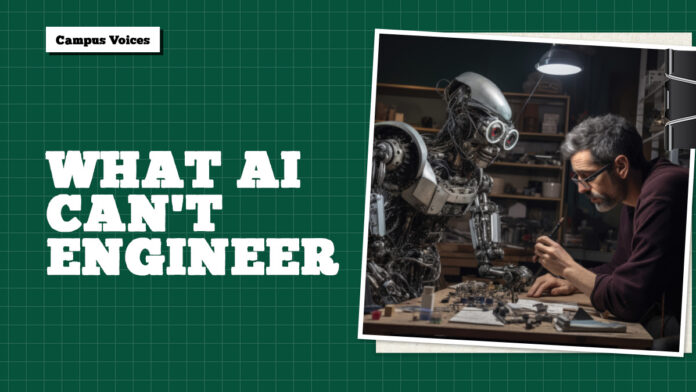

Beyond Speed and Automation
Most human knowledge is now accessible at the touch of a button. With the rise of advanced generative AI, complex calculations can be processed in seconds, leading some to wonder whether the raw, problem-solving value of a human engineer is slowly fading into obsolescence.
But they couldn’t be more wrong.
To understand why the human element remains irreplaceable, one has to look at the unpredictable nature of infrastructure. AI has evolved to model increasingly complex real-world conditions and dynamic environments. However, while AI can process enormous amounts of data and help navigate complexity, humans remain essential for high-stakes accountability, ethical trade-offs, and novel situations where historical data or model assumptions fall short.
When Judgment Matters
An AI can map terrain or run structural load simulations in seconds, but it acts like a high-tech GPS—highly capable until changing conditions create a blind spot. When deep underground or working in unstable rubble, a seasoned geotechnical or structural engineer brings field intuition, adaptive problem-solving, and split-second judgment that sensors and algorithms cannot fully replace.
This is where technology reaches its limits and human engineers make the difference.
It is also the very spirit driving this year’s Intercollegiate AggregatES Quiz (ESQ), hosted annually by UP Aggregates, Inc.
ESQ searches for some of the brightest young Civil Engineering students from colleges and universities across the country. This year, the organization aims to strip away the technological conveniences available to aspiring engineers and challenge them in a competition where engineering fundamentals take center stage.
Engineering Without Shortcuts
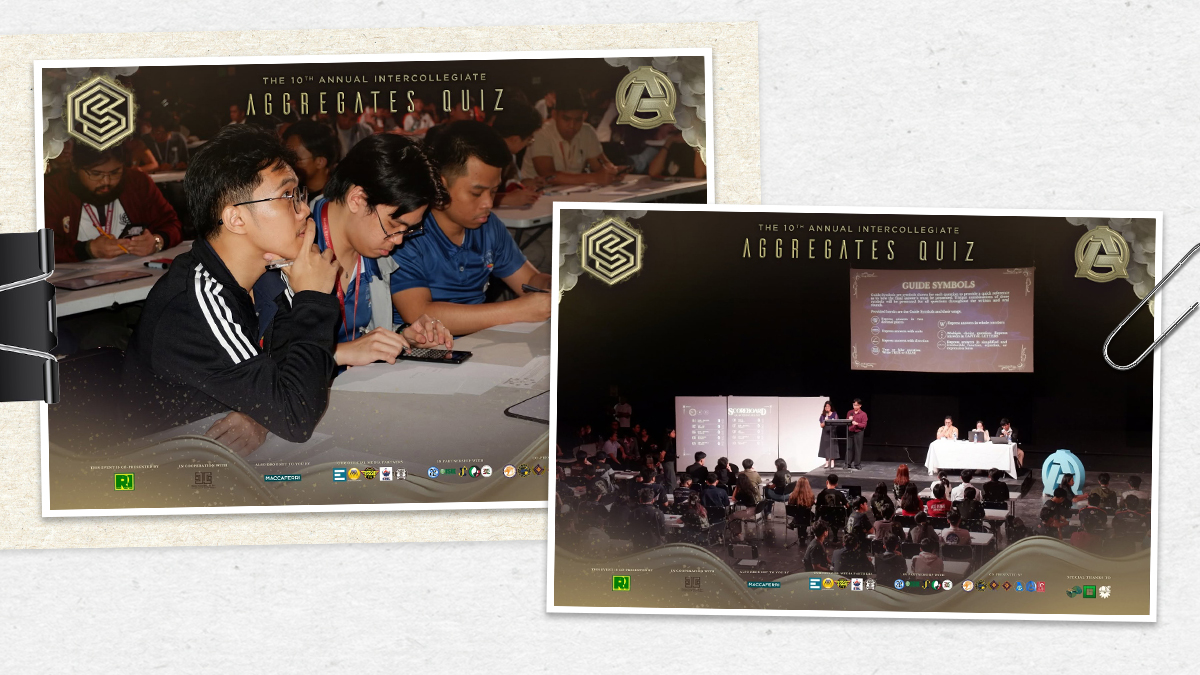
At this year’s ESQ, participants set aside search engines, engineering software, and automated tools. Instead, they are placed in a high-pressure environment where success depends on technical knowledge, analytical thinking, and sound engineering instincts.
Without automated engineering software doing the heavy lifting, success comes down to manual calculations, analyzing engineering problems from first principles, and applying concepts that every engineer is expected to understand before relying on digital tools.
Real-world engineering requires more than pushing data to the cloud; it demands a practical understanding of physical materials and how they behave under real conditions. When students are stripped of automated tools, they can no longer rely on software defaults alone. Instead, they must think critically, evaluate assumptions, and apply engineering principles to reach sound conclusions.
For the leaders behind the event, the mission goes far beyond testing textbook formulas. As the Overall Heads emphasized, “More than just a quiz, ESQ tests aspiring engineers under pressure to develop the human judgment, honor, and excellence that no AI can replicate.”
The Human Advantage
The future of engineering is not about choosing between AI and human expertise. The best engineers will know how to use both. AI can process information faster than any individual, but engineers remain responsible for interpreting results, making difficult decisions, and accepting accountability when those decisions affect people’s lives.
That is something no algorithm can assume.
AI has the processing power, but real engineering takes a human pulse.

Words by Josh Arguelles
Also published in GADGETS MAGAZINE Volume 27 Issue No. 1