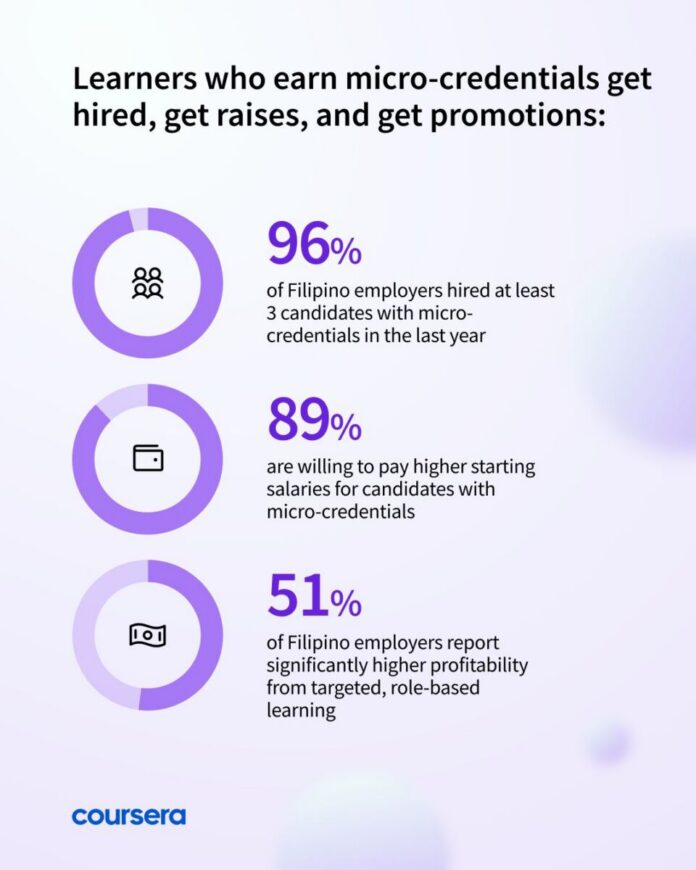

Micro-credentials are becoming an increasingly important factor in how Filipino employers recruit, evaluate, and reward new graduates, according to the Coursera Micro-Credentials Impact Report 2026. The report found that 96% of Filipino employers hired at least three candidates with micro-credentials over the past year, reflecting the continued shift toward skills-first hiring.
For employers, micro-credentials have become an indicator of practical, job-ready skills. According to the report, 77% of Filipino employers said candidates with micro-credentials move faster through the hiring process, four percentage points above the global average.
The findings come as artificial intelligence continues to reshape workforce requirements. A Google report estimates AI could generate approximately USD50.7 billion in productivity and cost benefits for the Philippines by 2030, provided the country develops a workforce equipped with relevant skills.
The report also points to the Commission on Higher Education’s CMO No. 1, Series of 2025, which established a national framework for industry-aligned, stackable micro-credentials, positioning higher education institutions to play a larger role in workforce development.
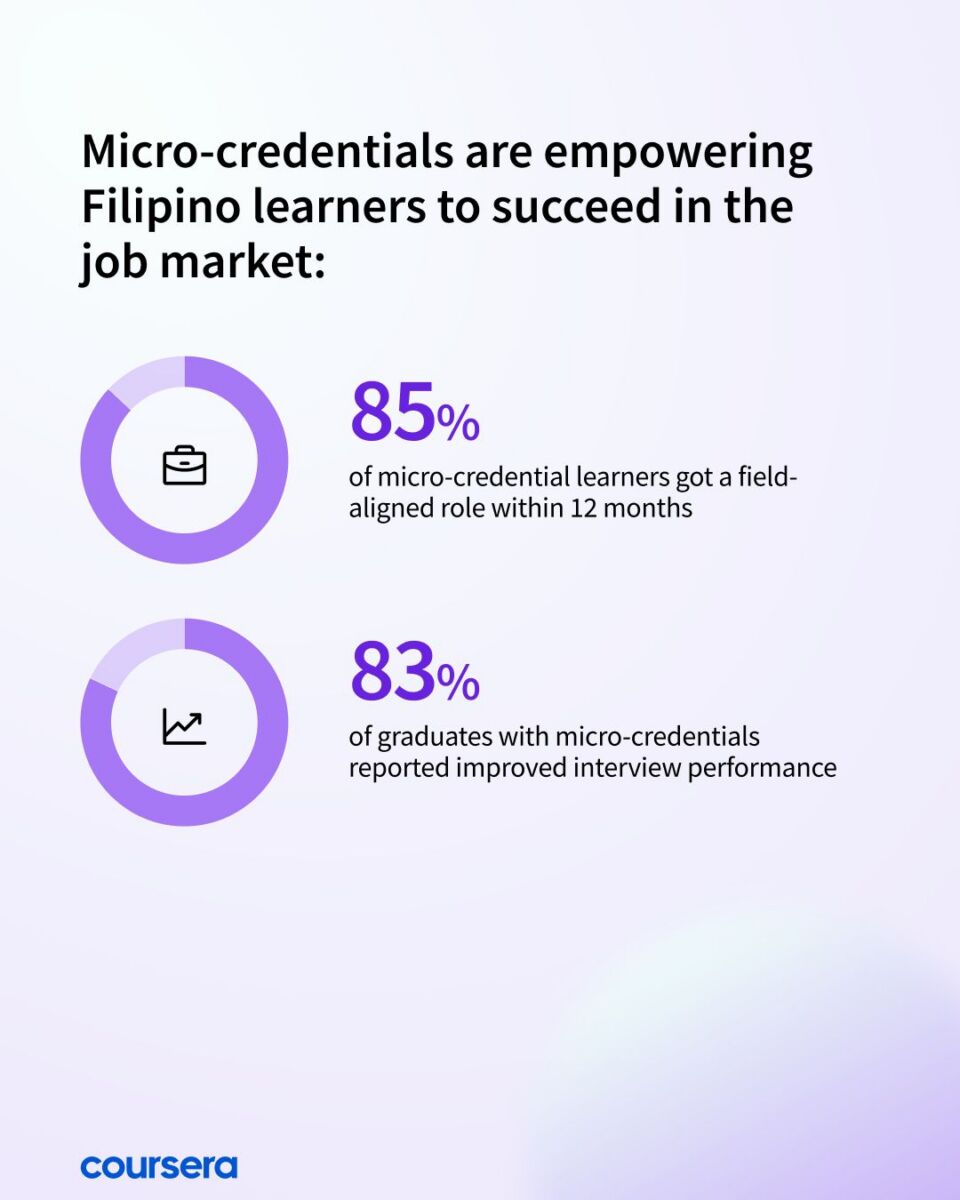
Based on responses from more than 3,500 employers, learners, and higher education leaders across seven countries, including the Philippines, the report found that 89% of Filipino employers are willing to offer higher starting salaries to graduates with micro-credentials. Among them, 36% said they would offer salary increases of more than 15% for graduates holding generative AI micro-credentials. The report also found that 85% of Filipino graduates with micro-credentials secured roles aligned with their field within 12 months.
“As AI reshapes the workplace, employers are placing a premium on candidates who can prove they have practical, job-ready skills. In the Philippines, micro-credentials are no longer just a differentiator. They are becoming an essential signal of employability,” said Ashutosh Gupta, managing director for Asia Pacific at Coursera.
“The data shows strong alignment between employers, students, and higher education leaders: learners want credentials that count toward degrees, employers are willing to pay more for them, and universities see them as critical to staying relevant. CHED’s CMO is a pivotal step, giving universities the policy foundation to embed micro-credentials at scale. Those that move fast will define the next generation of Filipino talent.”
Key Findings
Employers
The report found that:
- 96% hired at least three candidates with micro-credentials during the past year.
- 89% are willing to offer higher starting salaries to graduates with micro-credentials.
- 90% believe entry-level employees with micro-credentials perform better during their first year.
- 77% said credentialed candidates move faster through recruitment.
Students
Among Filipino learners:
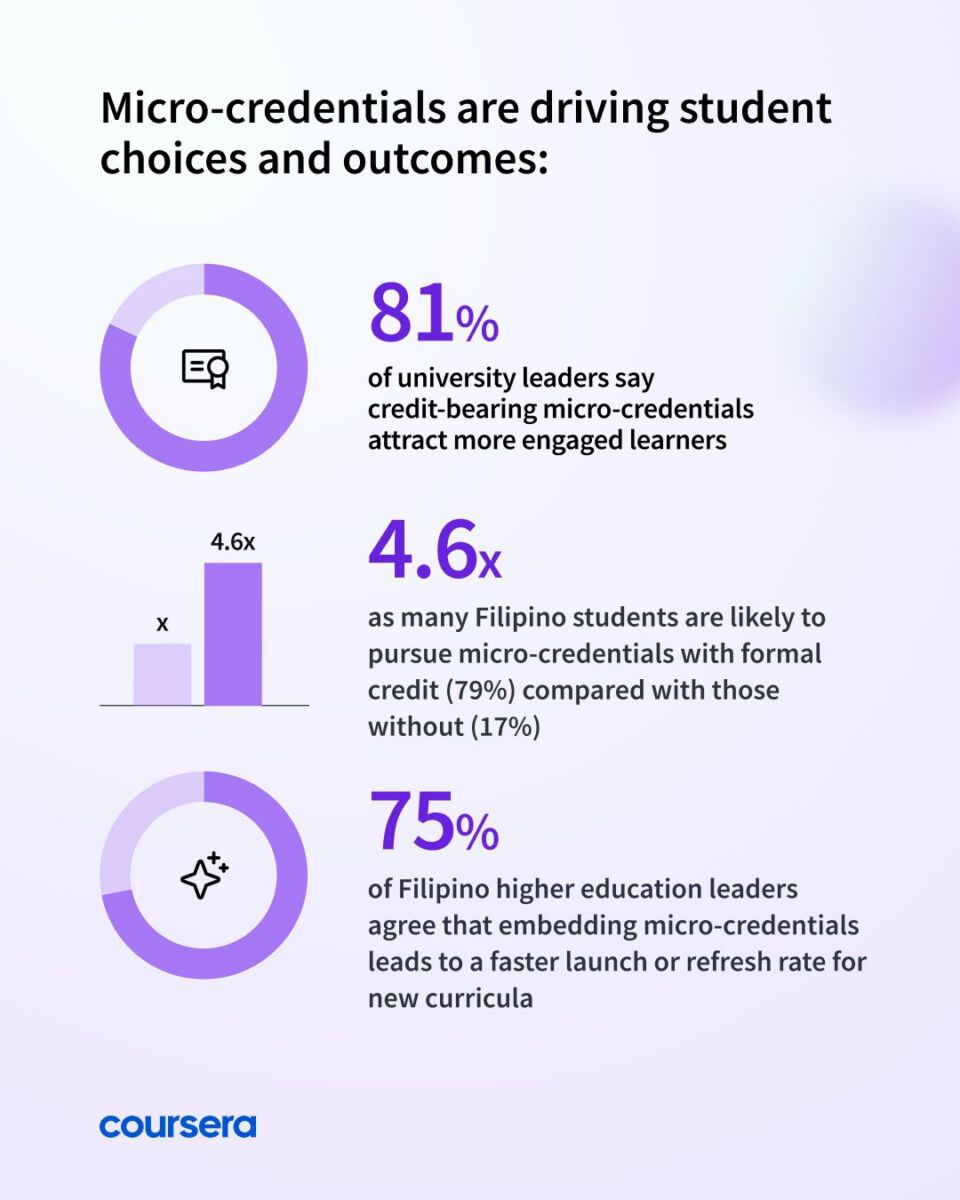
- 79% are more likely to pursue micro-credentials when they carry formal academic credit, compared with 17% when they do not.
- 62% consider industry-created micro-credentials that count toward a degree to be the strongest indicator of academic rigor.
- 85% secured employment aligned with their field within 12 months of graduation.
Higher Education
Higher education leaders also reported growing confidence in embedded micro-credentials:
- 86% believe they strengthen links between academic learning and workforce needs.
- 63% said institutions without embedded micro-credentials face moderate or significant strategic risk.
- 75% reported higher student retention.
- 75% said embedded credentials help institutions refresh curricula more quickly.
Higher Education Responds
Among the institutions adopting this approach is iPeople Inc., which has embedded more than 50 Professional Certificates across six schools, including the Mapua schools in Manila, Laguna, and Mindanao, the National Teachers College, the University of Nueva Caceres, and Mapua Malayan Digital College.
“The Philippines is at an inflection point. Our graduates are talented, but talent alone doesn’t win in a global job market. Proof of skills does. Micro-credentials embedded into a degree give Filipino students exactly that: industry-recognised, globally credible evidence of what they can deliver from day one,” said Dr. Dodjie Maestrecampo, president and CEO of Mapua Education Group.
“What gives me real confidence is that CHED is now establishing policy frameworks around this. Through our partnership with Coursera, we’re able to bring these credentials into our programs at scale, combining global content with local academic rigor.”