

New research from Fastly shows that AI-generated traffic is emerging as a distinct layer of internet activity, requiring organizations to rethink how they manage automated requests, protect digital infrastructure, and create value from machine-driven interactions.
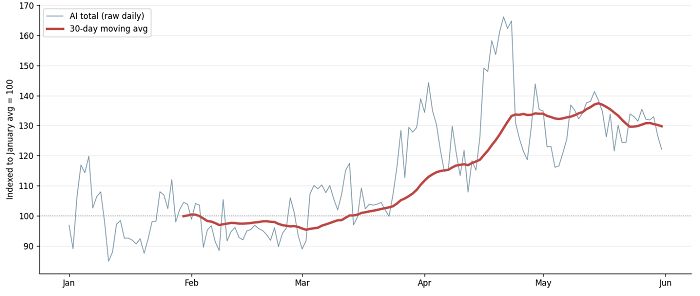
Based on traffic across Fastly’s global network, AI requests grew by approximately 30% between January and May 2026, around 6.5 times faster than human traffic during the same period. While AI traffic continues to increase, the research suggests that the more significant shift lies in how AI systems now interact with websites, applications, and digital services.
Rather than focusing solely on blocking malicious bots, organizations are increasingly being challenged to determine which automated interactions should be encouraged, managed, or restricted based on their business value.
AI Is Becoming a New Layer of Internet Traffic
Fastly’s research highlights several trends that are reshaping digital operations.
Organizations are making increasingly strategic decisions about AI traffic management, balancing content protection, visibility, customer acquisition, and digital distribution. These decisions can influence whether AI systems discover, reference, and surface content, ultimately affecting how customers find and engage with businesses.
The study also found that machine traffic now represents a significant share of internet activity, including AI crawlers, AI fetchers, bots, agents, and API-driven systems. AI fetchers and agents are becoming particularly important as AI assistants retrieve real-time information to answer questions, compare products, validate facts, and complete tasks on behalf of users.
AI Crawlers and AI Fetchers Serve Different Roles
Fastly distinguishes between two primary categories of AI traffic.
AI crawlers systematically collect information from websites to build and update AI models, while AI fetchers retrieve information in response to user requests made through AI assistants and emerging agentic applications.
The research found that these workloads place different demands on infrastructure. Based on May 2026 data, more than 51% of AI requests required origin server access, compared with less than 9% of human requests. Fastly also observed Claude-related traffic increasing by more than 555% compared with its January 2026 baseline.
“AI traffic is fundamentally changing how the internet operates,” said Artur Bergman, founder and chief technology officer at Fastly.
“Businesses are moving beyond a world where humans are the primary users of digital experiences. The challenge is no longer simply blocking bots, it’s understanding which machine interactions should be accelerated, managed, challenged, or stopped.”
AI Traffic Is Becoming a Business Decision
Fastly’s analysis suggests that AI traffic management is evolving beyond security and infrastructure into a broader business strategy.
The company cited examples of organizations taking different approaches. One company chose to block a sudden increase in AI fetcher traffic to help maintain content authority, while another allowed AI agents to access its content, resulting in increased fetcher activity and potentially greater visibility through AI-powered services.
According to Fastly, these decisions can influence not only access to digital content but also customer engagement in an increasingly AI-assisted internet.
Building a Machine Traffic Strategy
Fastly identifies three core elements of an effective machine traffic strategy:
- Visibility into which AI systems are interacting with digital properties.
- Context around how those systems behave and whether they deliver business value.
- The ability to respond differently based on the intent and impact of each request.
The company says its edge cloud platform helps organizations balance performance, security, bot management, and origin access with real-time intelligence.
More information and the complete research are available through Fastly’s website.