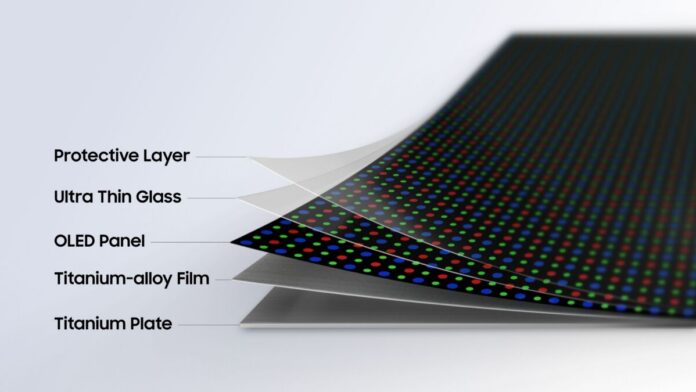

Samsung Electronics has introduced Flex Titanium, a redesigned display structure developed for its next generation of Galaxy foldable devices. Built on seven generations of foldable engineering, the technology combines two titanium-based components to improve durability and reduce the visibility of the screen crease without compromising slimness or flexibility.
A titanium-alloy film supports the display beneath the OLED panel, while a separate titanium plate reinforces the display module from below. Working together, the two components are intended to provide a stronger and more stable foundation for the screen as it repeatedly folds and unfolds.
“Samsung’s strength in the foldable category comes from connecting user needs with our technologies that deliver tangible benefits in everyday life,” said Sunghoon Moon, executive vice president and senior executive of the Mobile R&D Office for hardware at Samsung Electronics.
“For the next generation of Galaxy foldables, Samsung is building on years of expertise to bring display innovations into devices that enhance user experiences, anchored by exceptional viewing experiences.”
Building on seven generations of foldables
Samsung’s work in mobile displays includes the adoption of AMOLED technology in its devices beginning in 2007 and the subsequent development of flexible screen formats. Across seven generations of Galaxy foldables, the company says user feedback has consistently pointed to the same priorities: a larger, more immersive display with a less visible crease, without sacrificing durability or portability.
Meeting those expectations required changes to the materials and mechanical structure beneath the screen. Flex Titanium is Samsung’s latest attempt to balance the strength needed for everyday use with the flexibility required for repeated folding.
Two titanium components support the display
Titanium offers high strength and resilience, but its stiffness also makes it difficult to incorporate into a thin, flexible display. Samsung addressed this by integrating the material into two separate layers, each designed to perform a different structural role.
The first is a titanium-alloy film positioned beneath the OLED panel. Compared with polymer film, it provides 20 times greater mechanical stiffness, while a precision rolling process reduces its thickness to roughly one-third that of an average human hair. This allows the film to reinforce the display without adding substantial bulk.
Below the film sits a flexible titanium plate that supports the entire display module. Advanced hole-processing technology removes air gaps between the module and the adhesive on the plate, allowing tighter bonding and more stable support when the screen is unfolded while retaining enough flexibility for repeated use.
“By introducing sophisticated micro-patterned holes to the folding section of the titanium plate, we have successfully secured flexibility with robust durability,” said Kyung-Jin Yoo, executive vice president and head of the Mobile Display Product Development Team at Samsung Display.
Higher resolution with improved efficiency
Alongside the new titanium structure, Samsung has incorporated a high-resolution display architecture and next-generation organic materials. These are designed to produce more vivid images while reducing power consumption and improving overall display efficiency.
Together, the structural and display changes are intended to create a stronger foldable screen with a less visible crease and a slimmer profile. Flex Titanium will debut in Samsung’s next-generation Galaxy foldable devices, with further details expected at Galaxy Unpacked.