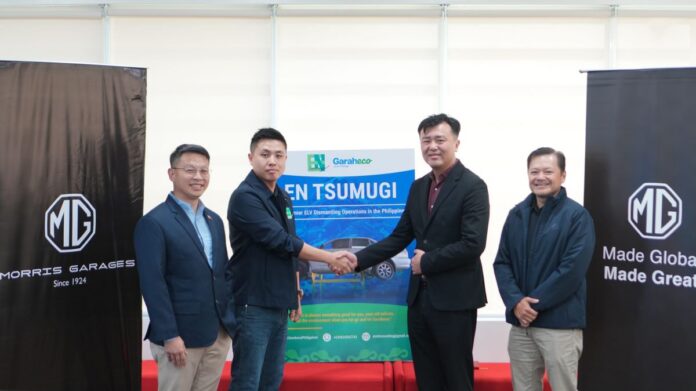

MG Motor Philippines has signed a formal agreement with En Tsumugi ELV Dismantling Corporation for the safe and environmentally responsible disposal of electric vehicle units damaged in a fire that occurred on April 6, 2025.
The partnership is notable for a specific reason: it’s the first time a local automotive company has formally documented and implemented a compliant disposal and dismantling process for fire-affected EV units in the Philippines.
What the Agreement Covers
The deal focuses on the proper handling of high-voltage (HV) batteries and other EV components, which require specialized procedures in line with global environmental standards. Under the agreement, all affected units will be processed in a controlled manner at En Tsumugi’s facility in Mexico, Pampanga, recognized as the country’s first model End-of-Life Vehicle (ELV) dismantling site.
Both parties emphasized strict compliance with environmental and safety protocols throughout the process, from battery handling to final disposal.
What Both Sides Are Saying
“Safety, responsibility, and sustainability remain at the core of MG’s operations,” said Wei Wei Zhang, president of MG Motor Philippines. “Through this partnership with En Tsumugi, we are ensuring that all necessary measures are taken to properly manage and dispose of affected EV units in a way that upholds the highest environmental and safety standards. This reflects our long-term commitment to responsible mobility in the Philippines.”
“As vehicle technologies evolve, proper recovery and treatment standards must evolve as well,” said John Hung, CFO and marketing director of En Tsumugi. “En Tsumugi remains committed to supporting safer, more sustainable end-of-life vehicle management aligned with emerging global environmental practices.”
Why This Matters for the EV Industry
EV fires present unique disposal challenges that conventional automotive processes aren’t designed to handle. Lithium-based batteries can retain charge and pose hazards long after a fire, requiring careful discharging, containment, and treatment before any dismantling can begin.
By formalizing this process with a dedicated ELV facility, MG Philippines is setting a practical precedent for how the local industry should respond to fire-affected EV units with documentation, compliance, and environmental accountability built in from the start.
For more information, visit mgmotor.com.ph or follow MG Philippines on Facebook, Instagram, and TikTok.