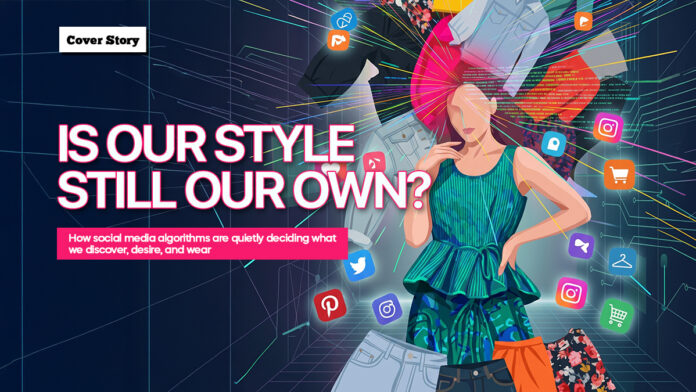

How social media algorithms are quietly deciding what we discover, desire, and wear
Getting dressed used to begin with a closet. Now, it can begin with a scroll.
You open TikTok for entertainment, and suddenly your feed is filled with ballet flats. Instagram starts showing you oversized jerseys. A creator you follow wears a certain bag, another recommends a particular skirt, and before long the same pieces seem to appear everywhere. Then one day, you realize you want them too.
That does not necessarily mean an algorithm told you what to wear. But it may have helped decide which clothes, aesthetics, brands, and people you encountered often enough to start wanting them in the first place.
Fashion trends have always been influenced by other people. Designers sent ideas down runways, celebrities brought them into popular culture, magazines interpreted them, and shoppers adapted them to their own lives. What has changed is the speed, scale, and precision with which those influences now reach us.
Today, platforms such as TikTok and Instagram do not simply show us what is popular. Their recommendation systems learn what holds our attention, then give us more of it. The result is a fashion world in which trends no longer move only from designers to consumers. They move through feeds.
Your Feed Knows Your Aesthetic
Spend enough time on social media and the algorithm begins building a version of you.
You linger on a video about minimalist outfits, so it shows you another. You save a creator wearing wide-leg trousers, then watch three clips about styling them. You search for a pair of sneakers, and soon your feed seems filled with people wearing similar shoes. None of those actions individually says, “This is my personal style,” but together they become signals.
Recommendation systems identify patterns in what users watch, like, save, share, search for, and sometimes buy. The more signals they receive, the better they become at predicting what might keep someone engaged.
One person’s feed might become filled with vintage denim, silver jewelry, and thrifted jackets. Someone else’s might revolve around neutral tailoring and structured bags, while a third sees sporty streetwear and colorful sneakers.
Each feed feels customized, but personalization creates an interesting paradox. The more accurately an algorithm identifies what you already like, the more likely it is to keep showing you variations of the same thing. Your personal style becomes easier to refine, but it may also become harder to escape.
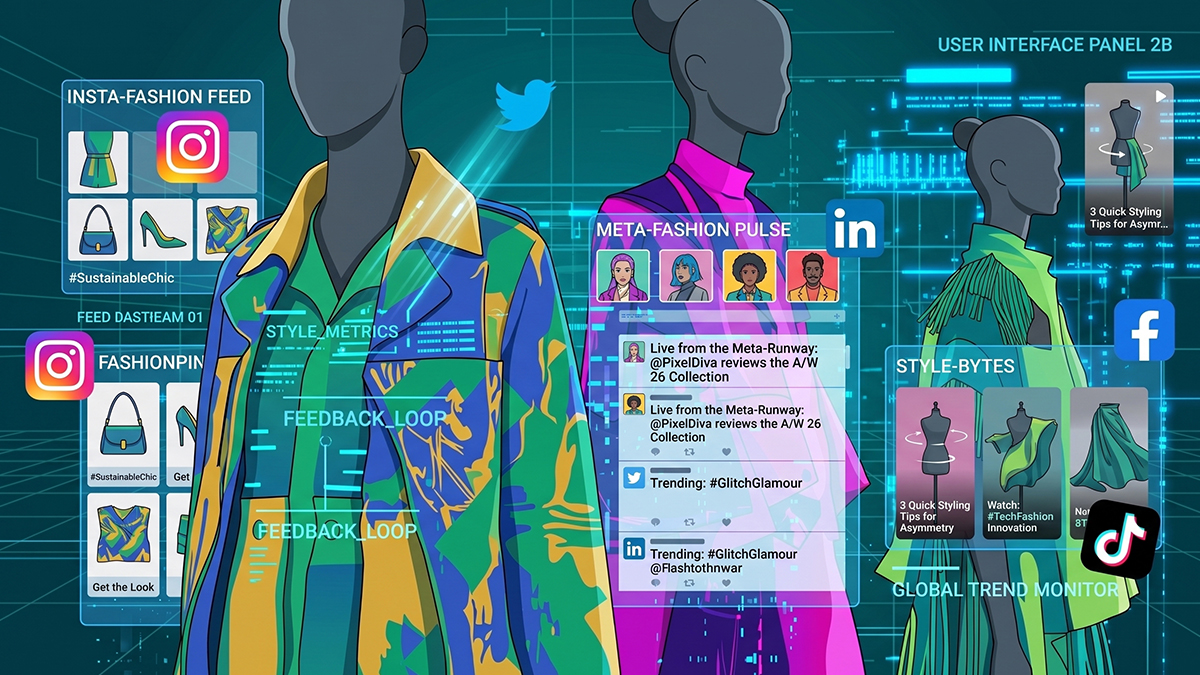
From Trend to Microtrend
The internet did not invent fashion cycles, but it has dramatically accelerated them.
Aesthetic labels can move from niche communities into mainstream feeds almost overnight. One week, everyone appears to be talking about quiet luxury. Then comes coquette, blokecore, office siren, mob wife, balletcore, tenniscore, or whatever “-core” happens to capture attention next.
These labels can be playful. They make fashion easier to search, remix, and participate in. Anyone can type the name of an aesthetic into a search bar and immediately find outfit ideas, shopping suggestions, tutorials, and creators who already embody it.
But that accessibility also changes the lifespan of trends. When millions of people are exposed to the same aesthetic at roughly the same time, the cycle from discovery to saturation becomes dramatically shorter. A look can feel new, become unavoidable, and start feeling outdated within months.
Fashion once moved through seasons. Online, it can move through weeks. Creators search for the next aesthetic, brands respond to what is gaining attention, and consumers learn that there is always another version of themselves waiting one scroll away.
When “For You” Becomes “For Everyone”
The feed feels personal, but the trends can become remarkably uniform.
Someone in Manila, Seoul, Los Angeles, London, or Sydney can discover the same shoes, bags, silhouettes, and styling tricks within days of one another. Geography matters less when viral content moves across borders almost instantly.
That can be liberating. Fashion inspiration is no longer limited to what happens to be available in your local mall or what traditional media chooses to publish. Someone interested in Japanese streetwear, modest fashion, archival designer pieces, Filipino independent labels, or vintage subcultures can find communities that might once have been difficult to access.
Algorithms can make niche fashion visible. The irony is that once a niche becomes visible enough, it can stop being niche. A look created by a small online community can suddenly appear on thousands of mood boards, become a hashtag, enter mainstream collections, and eventually arrive in everyone’s recommendations.
The internet can democratize fashion and homogenize it at the same time.
The Creator Is the New Storefront
Fashion discovery is also increasingly turning directly into fashion commerce.
Creators no longer simply show people what they are wearing. They can link directly to products, earn commissions through affiliate programs, host livestream selling sessions, build storefronts, launch their own labels, or turn their personal aesthetic into an entire business.
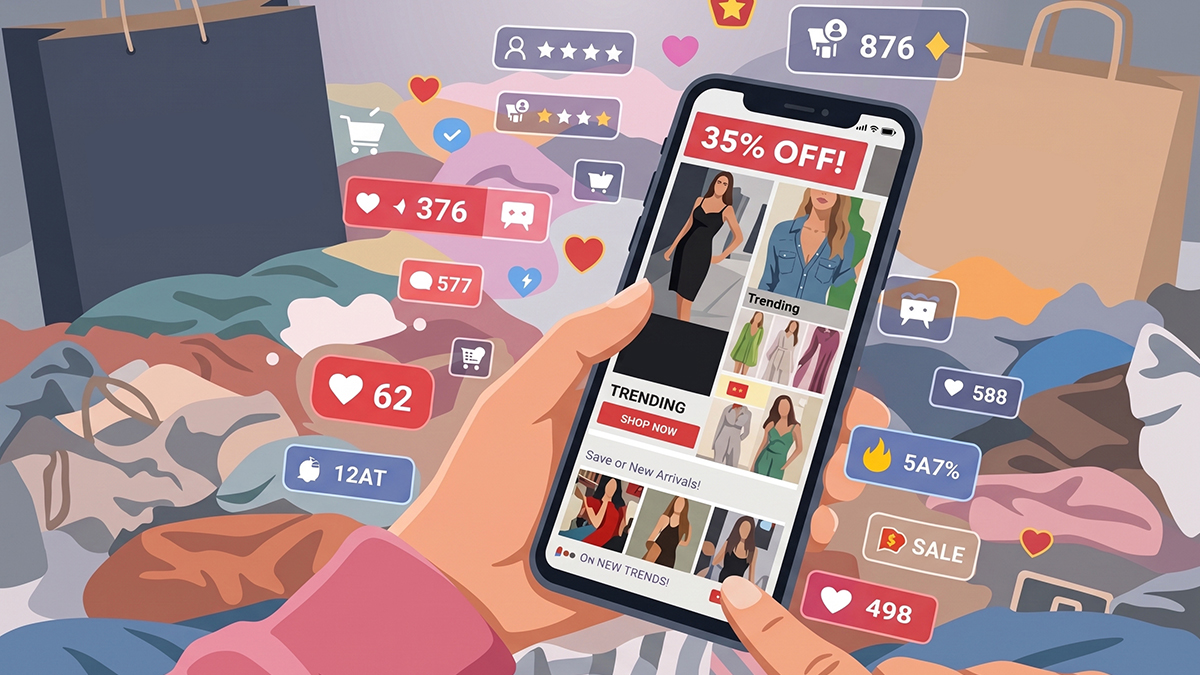
That shortens the traditional journey from inspiration to purchase. You see an outfit, like it, tap the product, and buy it. The distance between discovery and transaction can now be measured in seconds.
For younger consumers especially, the person introducing a product can matter almost as much as the brand itself. A creator who has built a recognizable style and an audience that trusts their recommendations can make an unfamiliar label feel more relevant than a conventional advertisement from a major fashion house.
The algorithm decides who gets seen, the creator translates visibility into desire, and the shopping platform removes as much friction as possible between desire and purchase. Fashion is no longer simply sold through stores. It is sold through attention.
Did I Want This, or Did I See It Too Many Times?
That is where personal style becomes harder to separate from platform influence.
Wanting something after seeing it online does not make that desire fake. Fashion has always been social. People borrow ideas from friends, musicians, films, celebrities, subcultures, and strangers on the street. The difference is that social media can repeat the influence hundreds of times.
A particular shoe might appear in a styling video, an unboxing, a “get ready with me,” a shopping haul, an advertisement, and a creator recommendation all within the same week. After enough appearances, familiarity starts doing its own work. The object feels relevant because it is everywhere.
When something feels culturally inevitable, buying it can feel less like following a trend and more like simply keeping up. This is also where microtrends can encourage overconsumption. If each aesthetic comes with its own unofficial uniform, participating often means buying something new, while another aesthetic is already waiting before the previous purchase has begun to feel old.
Personal style can start to feel like a series of temporary subscriptions.
But Algorithms Can Also Expand Style
It would be too simple to blame social media for making everyone dress the same. The same systems that amplify mass trends can introduce people to ideas they might never have encountered otherwise.
A teenager can discover independent Filipino designers through a creator’s video. Someone bored with mainstream fashion can find vintage communities, upcycling tutorials, sewing accounts, sneaker collectors, sustainable brands, or people styling clothes for body types rarely represented in traditional fashion media.
For many users, the algorithm does not narrow style. It opens a door.
The difference may depend partly on how actively we use it. If we repeatedly engage with the same aesthetic, the platform learns that preference. If we deliberately explore unfamiliar designers, communities, cultures, and styles, what appears in the feed can become more varied too.
We may not control the algorithm, but we are not entirely passive inside it either.
Personal Style in the Age of Recommendation
Maybe the real question is not whether our style is still our own. Personal style has never developed in isolation; every generation has dressed in conversation with the culture around it.
The more useful question is whether we still recognize the forces influencing us. There is a difference between discovering an idea and being trapped inside a loop of similar recommendations, between borrowing inspiration and feeling pressured to reinvent your wardrobe every time a new aesthetic starts trending.
Algorithms are very good at predicting what we might click next. They are less qualified to decide who we want to become.
Perhaps personal style in the algorithmic age isn’t about rejecting trends, deleting TikTok, or pretending our feeds don’t influence us. It is about making the final choice consciously: scrolling past what does not feel like you, wearing something after the internet has declared it outdated, repeating an outfit even when another aesthetic is trending, or following creators who expand your taste instead of simply confirming it.
The algorithm can suggest the clothes, show us the trend, and even predict what we might buy. But getting dressed is still the moment when recommendation becomes decision, and that may be where personal style survives.
Words by Phia Manuell Layoso
Also published GADGETS MAGAZINE Volume 27 Issue No. 2