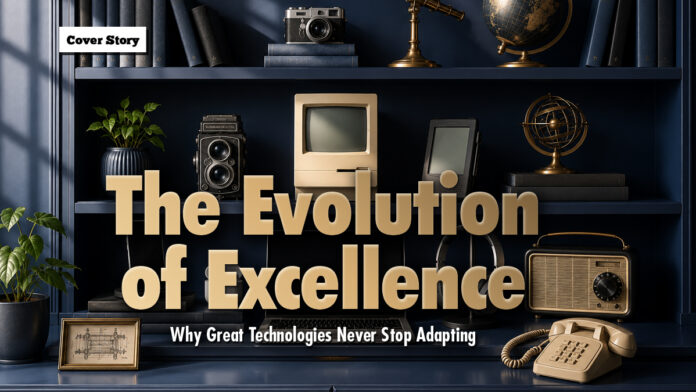

History has shown that innovation alone rarely guarantees longevity.
Many technologies arrive with groundbreaking ideas, only to fade as habits, expectations, and lifestyles change around them. The products that endure are seldom those that simply introduced something new. More often, they are the ones that kept evolving long after their first breakthrough.
That is because relevance is never fixed.
The way we communicate, work, learn, create, and preserve memories today is very different from how we did twenty years ago. Technology that succeeds over decades recognizes that while human needs remain surprisingly consistent, the ways people expect those needs to be fulfilled continue to evolve.
Perhaps that is the real definition of excellence.
Not building the perfect product once, but continually asking the same question:
What do people need now?
The Evolution of Memory
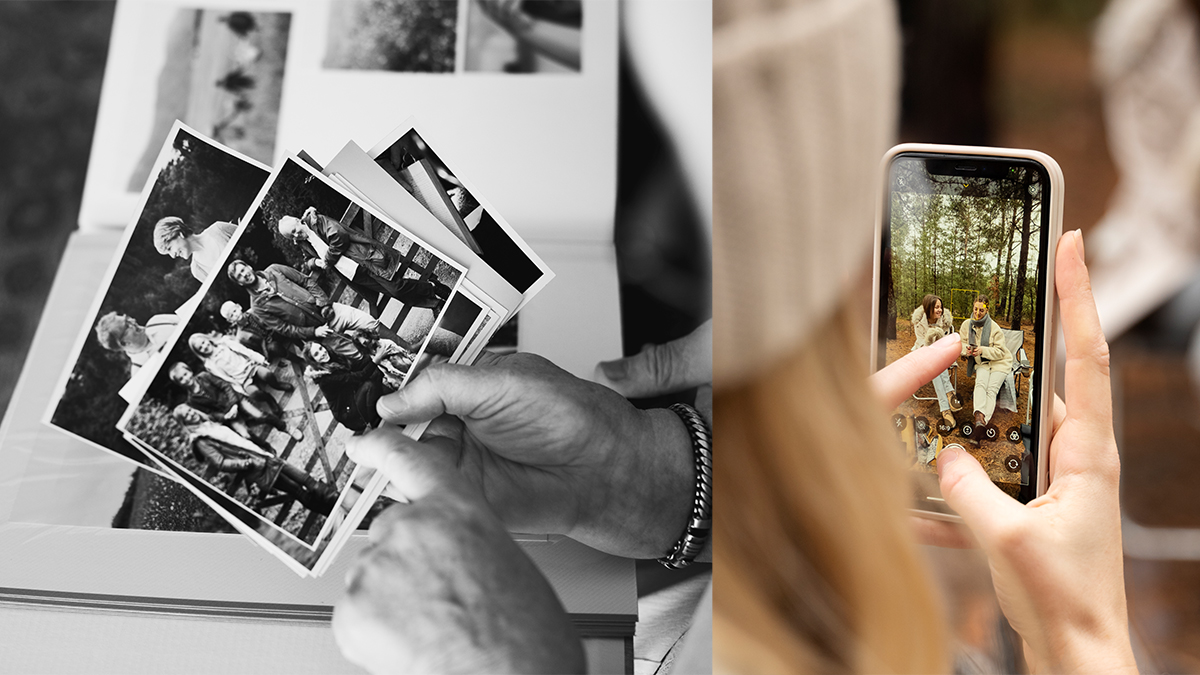
ong before smartphones could capture cinematic video or artificial intelligence could remove unwanted objects with a tap, photography already served a simple and deeply human purpose: preserving memories.
A family portrait displayed in the living room. A graduation photograph carefully stored in an album. A child’s first steps captured for future generations.
The technology has changed dramatically over the past century, but the reason people reach for a camera has remained remarkably constant.
For decades, manufacturers competed by improving the camera itself. Better lenses. Larger sensors. Faster autofocus. Higher resolution. Professional photographers mastered exposure, aperture, shutter speed, and film development because creating an exceptional image demanded technical expertise.
Eventually, however, expectations began to shift.
Photography was no longer reserved for birthdays, weddings, and holidays. It became part of everyday life. Parents wanted to capture fleeting moments before they disappeared. Travellers wanted to share experiences instantly. Friends wanted to document ordinary days as easily as extraordinary ones.
The question quietly changed.
It was no longer:
“How can we build a better camera?”
It became:
“How can we make remembering easier?”
Apple became one of the companies that most clearly recognized this shift.
When the first iPhone arrived in 2007, camera phones were already common. Nokia, Sony Ericsson, Samsung, and others had spent years improving camera hardware, while dedicated digital cameras still produced noticeably better images.
Rather than competing solely through specifications, Apple gradually shifted much of photography’s complexity away from the user.
Features such as HDR, Portrait Mode, Night Mode, and computational photography allowed the device to make increasingly sophisticated decisions automatically. Users no longer needed to understand every technical setting to capture memorable images. The technology worked quietly in the background, allowing people to focus on the moment instead of the mechanics.
The experience continued after the shutter was pressed.
Cloud synchronization transformed photographs from files stored on a single device into memories that followed users across phones, tablets, and computers. More recently, artificial intelligence has begun making it easier to organize, search, and edit growing photo libraries using natural language rather than manual sorting.
Apple did not invent the camera phone, nor was it alone in advancing computational photography. Companies such as Google, Samsung, HONOR, OPPO, vivo, and Xiaomi have all helped redefine what smartphone photography can accomplish. Together, they shifted the industry’s attention away from hardware specifications alone toward intelligent software and seamless user experiences.
The evolution of photography reflects a broader lesson.
People have never simply wanted better cameras.
They have wanted better ways to remember.
Technology continues to evolve because that desire remains unchanged, even as the tools that fulfil it become increasingly intelligent.
The Evolution of Connections

For centuries, technology has worked to overcome physical distance. Letters carried thoughts across oceans, telephones allowed voices to travel across cities, and the internet made conversations nearly instantaneous.
But as the world became more connected, our expectations changed.
Connection was no longer measured by how quickly a message could be delivered. We began looking for richer ways to share our lives through photos, videos, live conversations, online communities, and real-time collaboration. We wanted technology that did not simply transmit messages, but helped us share experiences, build relationships, and work together regardless of distance.
As people’s expectations evolved, so did the technologies that enabled them. Digital platforms were no longer just communication tools. They became spaces for community, commerce, entertainment, and collaboration. Facebook is one of the clearest examples of this broader transformation.
When Facebook launched in 2004, its purpose was to help people connect through online profiles. Users shared status updates, uploaded photos, and reconnected with classmates and friends. It reflected how people wanted to socialize online at the time.
As digital behavior changed, Facebook adapted alongside it. The introduction of the News Feed transformed static profiles into continuously updated conversations. Messenger evolved into a standalone platform as users increasingly preferred private, instant communication over public posting. Facebook Groups enabled people with shared interests to build communities regardless of geography. Marketplace expanded the platform beyond social interaction into local commerce, while Facebook Live and later Reels reflected the growing demand for real-time and short-form content.
During the COVID-19 pandemic, that adaptability became even more apparent. As physical distancing became part of everyday life, Facebook’s ecosystem helped families celebrate milestones, businesses stay connected with customers, schools communicate with students, and communities support one another despite being apart. The platform demonstrated how digital connection had evolved beyond conversation to include collaboration, support, and shared experiences.
Yet this evolution also came with trade-offs. As Facebook expanded into news, commerce, video, and AI-powered discovery, it faced growing scrutiny over privacy, misinformation, content moderation, and the influence of algorithmic feeds on what people see and share. At the same time, changing user behavior shifted much of online interaction away from public posting toward private messaging and smaller communities, while younger audiences increasingly explored newer social platforms. Reinvention, it became clear, was as much about responding to challenges as introducing new features.
Even so, Facebook and Messenger have continued to evolve. Features such as Channels provide creators and organizations with new ways to communicate with their communities, while Meta AI is transforming Messenger into more than a messaging app by helping users search for information, generate ideas, and interact with AI directly within conversations. These developments reflect a broader industry trend: communication platforms are becoming tools not only for connecting people, but also for helping them discover, create, and collaborate.
Facebook’s continued relevance illustrates a larger lesson about technological excellence. Great communication technologies endure not because they remain unchanged, but because they continually redefine what connection means as people’s needs evolve.
The Evolution of Creativity
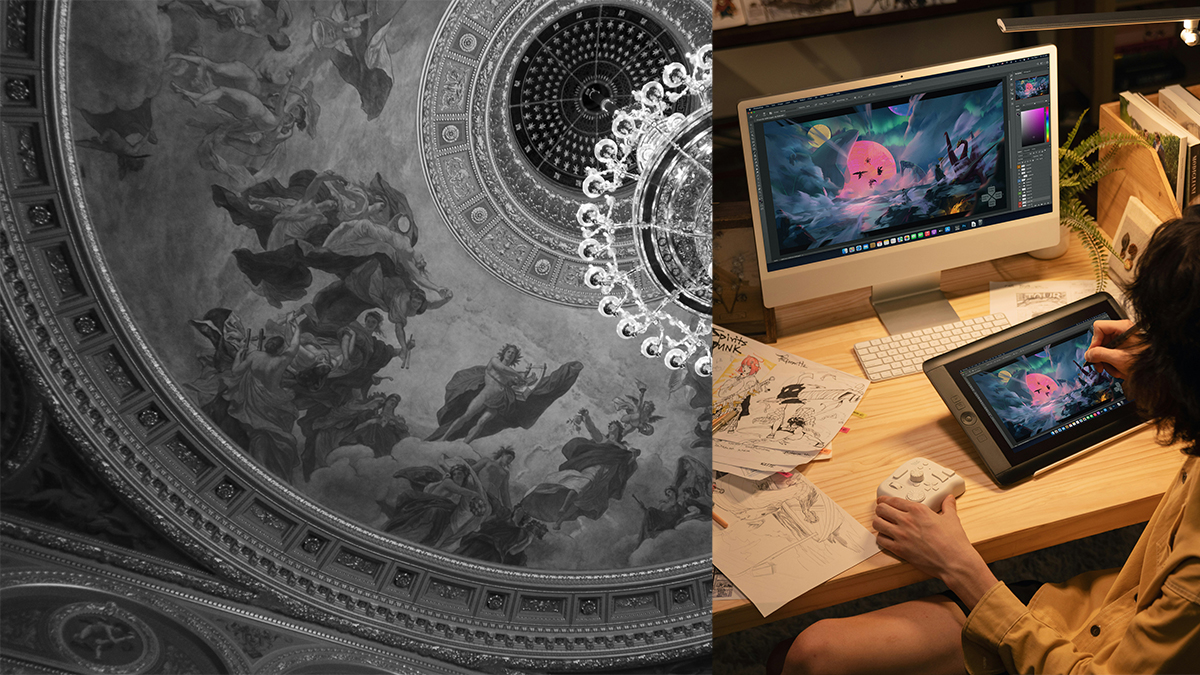
Creativity has always been one of humanity’s defining traits. Long before the first computer, people painted cave walls, composed music, designed buildings, and wrote stories to make sense of the world around them. Technology has never replaced that instinct. It has simply expanded what people are capable of creating.
For decades, creative software focused on individual capability. Word processors replaced typewriters. Graphic design moved from drafting tables to desktop computers. Video editing became digital. Every advancement gave creators more precision, more control, and more possibilities.
But as technology matured, the nature of creativity itself began to change. Ideas were no longer developed by one person on one computer. Creative work became increasingly collaborative, with teams working across continents, designers switching between devices, and students and professionals expecting instant access to files, feedback, and information. The evolution of creative technology was no longer defined solely by what software could do, but by how effectively it enabled people to work together.
That shift gave rise to a broader creative ecosystem. Platforms such as Canva made design accessible to millions of people with little to no formal training, while Figma reimagined collaboration by allowing entire teams to design together in real time through the browser. Together, they reflected an industry-wide transition from isolated desktop applications to connected, cloud-based creative workflows that welcomed both professionals and everyday users.
It’s difficult to talk about modern creativity without talking about Adobe. Long before “content creator” became a career, Adobe was already helping people produce everything from magazines and photographs to films, illustrations, and digital experiences. Its software has shaped the workflows of creative professionals for decades.
As those workflows evolved, Adobe evolved with them. For years, Creative Suite represented the benchmark for professional creative software, with applications installed on individual computers and upgraded through periodic releases. It reflected how creative work was done at the time.
As collaboration, mobility, and cloud computing became central to the creative process, Adobe recognized that the workflow had become the real product. With the introduction of Creative Cloud, its tools became part of a connected ecosystem where projects could move across devices, assets could be shared through the cloud, and continuous updates replaced long upgrade cycles.
More recently, Adobe responded to another major shift with Firefly, its family of generative AI tools. Rather than presenting artificial intelligence as a replacement for creative professionals, the company positioned it as a way to accelerate repetitive tasks, generate early concepts, extend images, and streamline parts of the creative process while leaving creative judgment in the hands of users.
Like many technological advances, however, generative AI has also introduced new questions. Debates surrounding authorship, copyright, training data, creative ownership, authenticity, and the impact of automation on creative professions continue to shape how these tools are developed and adopted. As with previous technological shifts, adaptation has brought both new opportunities and new responsibilities.
Adobe’s continued relevance reflects a broader lesson about creative technology. Success has come not from preserving a familiar way of working, but from recognizing that creativity itself has become more collaborative, more connected, and increasingly supported by intelligent tools.
Today, people expect more than software that can edit photos or produce videos. They expect platforms that help them brainstorm, collaborate, learn new skills, and transform ideas into finished work more efficiently than ever before.
The Evolution of Excellence
Photography. Connection. Creativity.
At first glance, they seem like very different technologies. Yet they all point to the same lesson: while the tools continue to evolve, the human needs behind them remain remarkably consistent.
We still want to remember. We still want to belong. We still want to create.
The technologies that endure illustrate how technology can evolve alongside those needs, but adaptation alone is not the measure of excellence. Market forces, ecosystems, and timing also shape which technologies endure. The stronger test is whether each new evolution continues to create meaningful value for the people who use it.
Perhaps that is the real definition of excellence. Not delivering a breakthrough once, but continually responding as people’s lives, expectations, and habits change.
Because the technologies we remember aren’t simply the ones that changed the world once.
They’re the ones that never stopped changing with it.
Words by Aljhelyn Piador
Also published in GADGETS MAGAZINE Volume 27 Issue No. 1