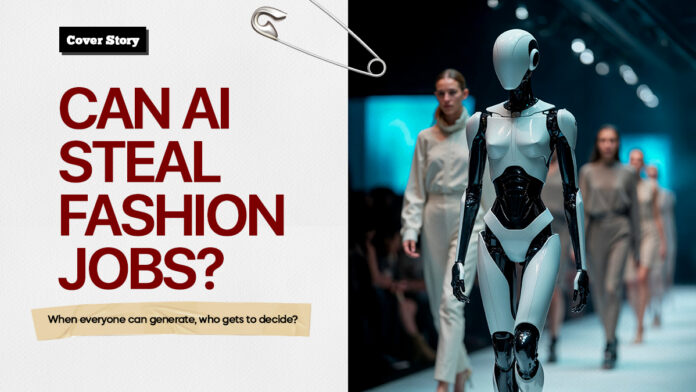

When everyone can generate, who gets to decide?
Fashion has always been about taste. Not simply knowing what looks good, but knowing why it works. Knowing when a color combination feels elegant and when it feels forced and just plain loud. Knowing when to follow a trend, and when to ignore it entirely.
AI can generate a thousand cerulean sweater designs. It still doesn’t know why Miranda Priestly would hate 999 of them.
Artificial intelligence can produce an astonishing number of possibilities. Give it a prompt, and it can generate a collection. Give it an image, and it can restyle it. Feed it enough consumer data, and it can identify patterns, forecast demand, and suggest what people might want to wear next. Generative tools can visualize ideas in seconds that might once have taken hours to sketch, photograph, retouch, or prototype.
But fashion has never simply been about producing more of what people already like. Some of its most memorable moments came from people willing to reject the obvious, making something strange, uncomfortable, excessive, minimal, rebellious, or simply different enough to change what everyone else considered beautiful.
Across the industry, AI is moving from the sidelines into the workflow. It is helping designers develop concepts, brands create campaign imagery, retailers anticipate demand, and shoppers discover what to wear. Yet AI is not necessarily walking into a fashion house and taking someone’s job whole. More often, it is taking pieces of it, and when enough pieces disappear, the job itself begins to look different.
The Designer
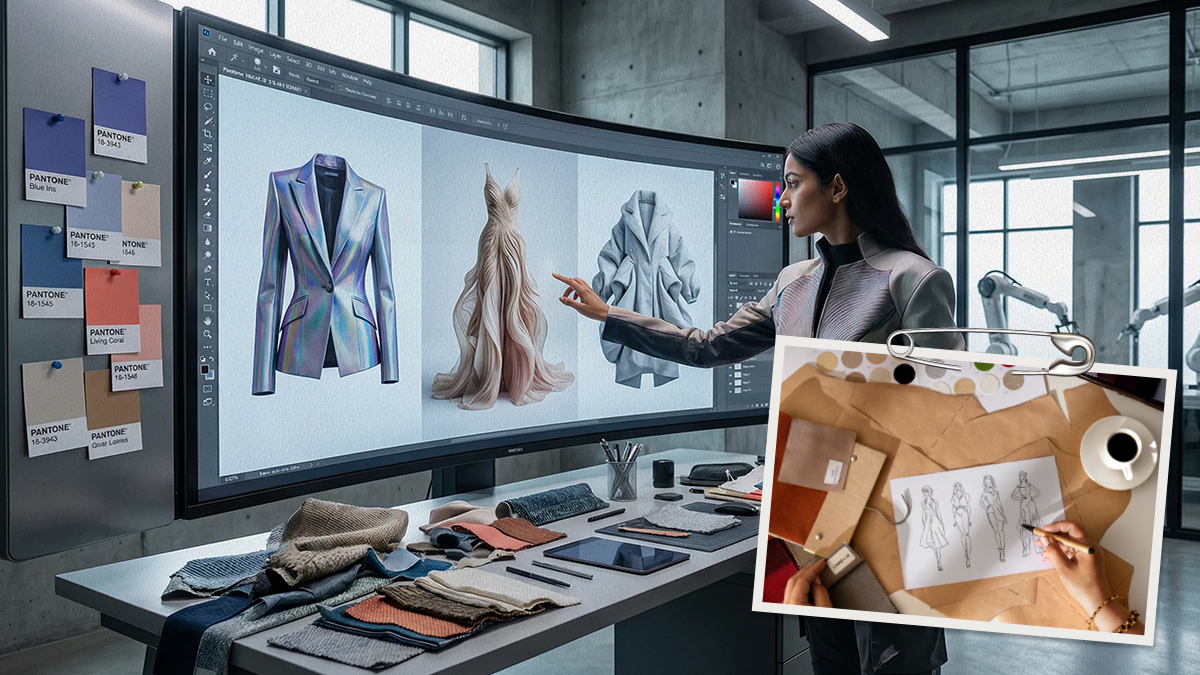
For generations, fashion design has been associated with the physical act of creation. Designers sketch silhouettes, select fabrics, develop patterns, experiment with proportions, and eventually turn an idea into something wearable.
Artificial intelligence changes what happens before any of that reaches the cutting table. Generative platforms such as Midjourney and OpenAI’s image-generation tools can visualize concepts almost instantly, while fashion-specific technology platforms can help teams move from ideation toward product development. Instead of spending hours translating an idea into its first visual form, a designer can explore dozens or even hundreds of directions before committing to one.
That sounds like creative freedom, but it can also become creative overload. If a designer can generate 500 possible silhouettes in the time it once took to develop five, producing ideas is no longer necessarily the bottleneck. Choosing among them is.
The designer’s role therefore begins to move upstream. The valuable skill is no longer only the ability to produce a beautiful sketch, but recognizing which idea has potential, which feels derivative, which belongs to the brand, and which should never leave the screen.
AI expands the possibility space, but the designer still decides what deserves to exist within it. The role becomes part creator, part editor, and part curator of machine-assisted ideas. The machine can make the options abundant; it is still the human who has to make one of them matter.
The Image Makers
The disruption looks different once an idea becomes an image.
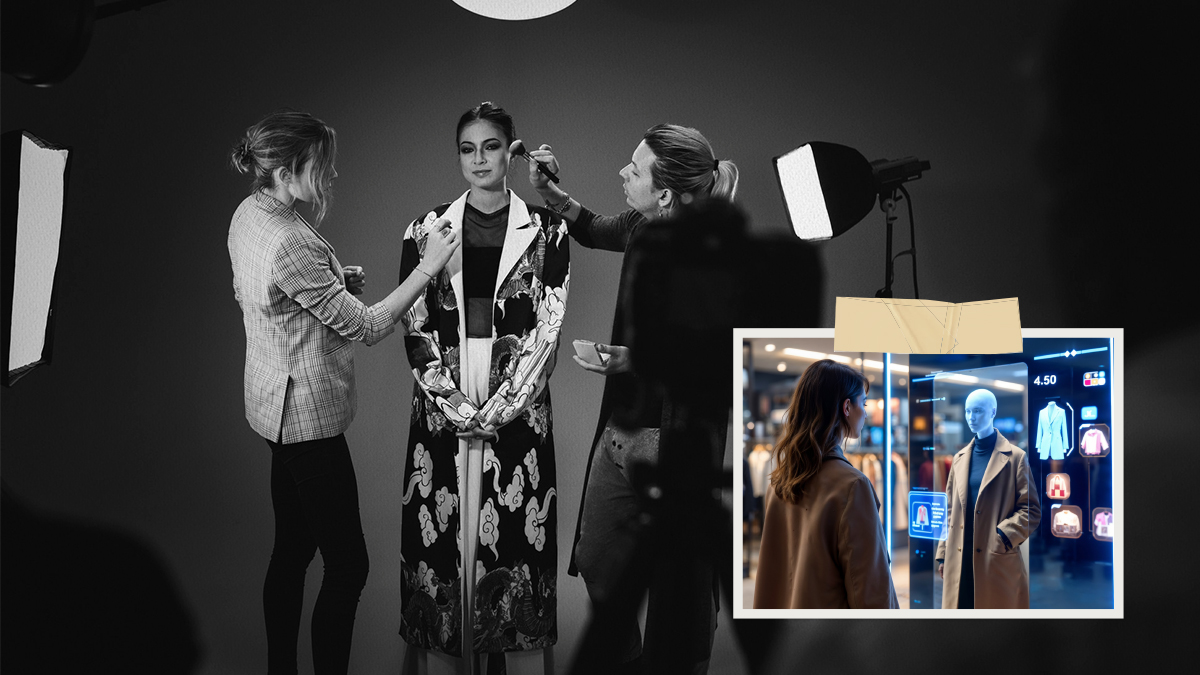
Fashion photography has traditionally required an ecosystem of people: models, photographers, stylists, makeup artists, assistants, retouchers, and producers. Many of those roles depend on something technology has historically struggled to reproduce convincingly, namely a physical body wearing a physical garment in a physical space. A sleeve wrinkles, fabric catches the light, and a dress moves differently depending on how the person wearing it turns. Around that interaction, a creative team makes countless small decisions that shape the final image.
Yet not every fashion photograph needs that level of physical reality. For e-commerce, catalog imagery, concept testing, and some forms of advertising, synthetic people and AI-generated environments are becoming commercially useful. Digital-model platforms can create different body types and poses. At the same time, virtual try-on and image-generation systems can show garments in multiple settings without staging a new shoot for every variation.
The consequence for human models, photographers, retouchers, and production crews is more complicated than outright replacement. Fashion houses will still want human personalities for major campaigns, runway presentations, editorial shoots, and moments where physical presence is part of the product. But if routine imagery can increasingly be created without a conventional shoot, brands have less reason to assemble a full production team every time they need another image.
AI will not eliminate fashion photography or modeling as professions. But it will make some of the work around those professions unnecessary.
The Creative Designer
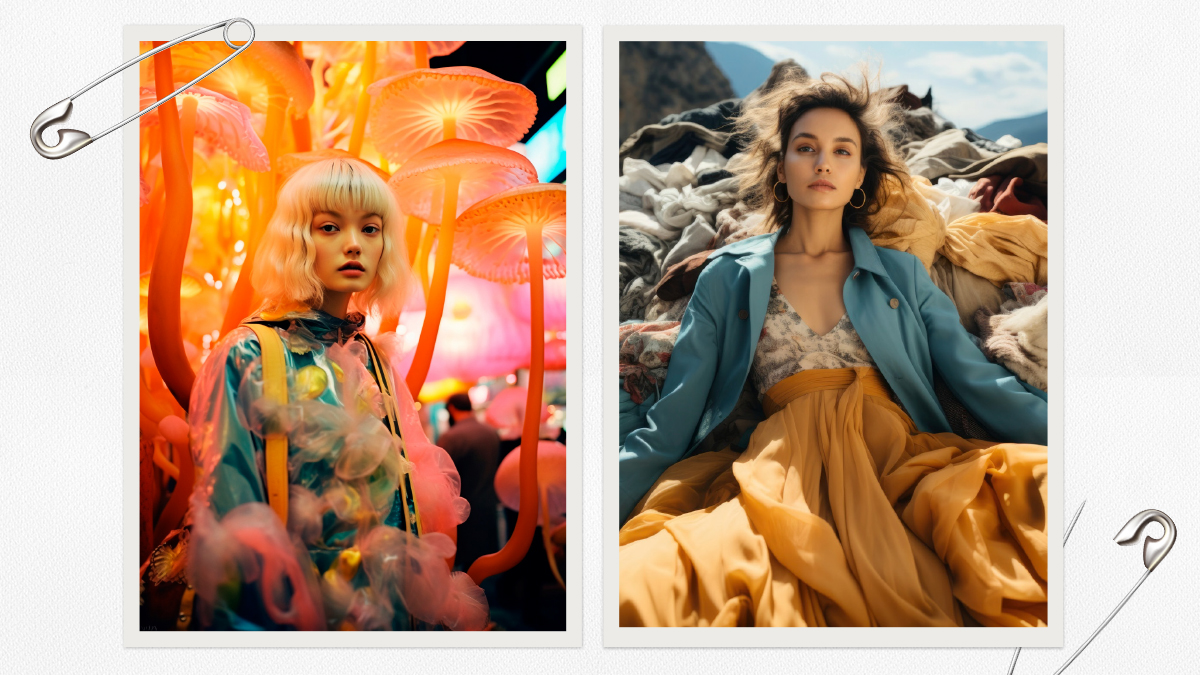
If AI changes how designers generate ideas and brands produce images, it creates an even bigger shift at the top of the creative hierarchy.
The creative director’s job has never been simply to make things. It is to decide what a brand should stand for. Which image feels unmistakably like the house? Which trend is worth pursuing? When does something feel fresh, and when does it look like a polished copy of an idea that was already popular six months ago?
Generative AI can produce hundreds of campaign concepts, styling directions, visual identities, and product narratives in remarkably little time. The challenge is identifying the idea that resonates because it is meaningful, not just polished.
When software can generate almost anything on command, the ability to say no becomes a creative skill in itself. The creative director’s value increasingly lies in setting standards, identifying what belongs, and rejecting what does not.
But what happens if an AI system learns from years of a brand’s campaigns, previous collections, customer response, and established visual codes? Could it eventually approximate some of the decisions a creative director makes?
Perhaps. Which means human judgment cannot simply rely on repeating what a brand has already been. The advantage shifts toward recognizing cultural change before it becomes obvious, breaking with a successful formula, or deciding that what worked yesterday is precisely what should not be done tomorrow. Taste is not only knowing what fits the pattern. Sometimes it is knowing when to break it.
The real threat isn’t replacement. It’s the missing first step.
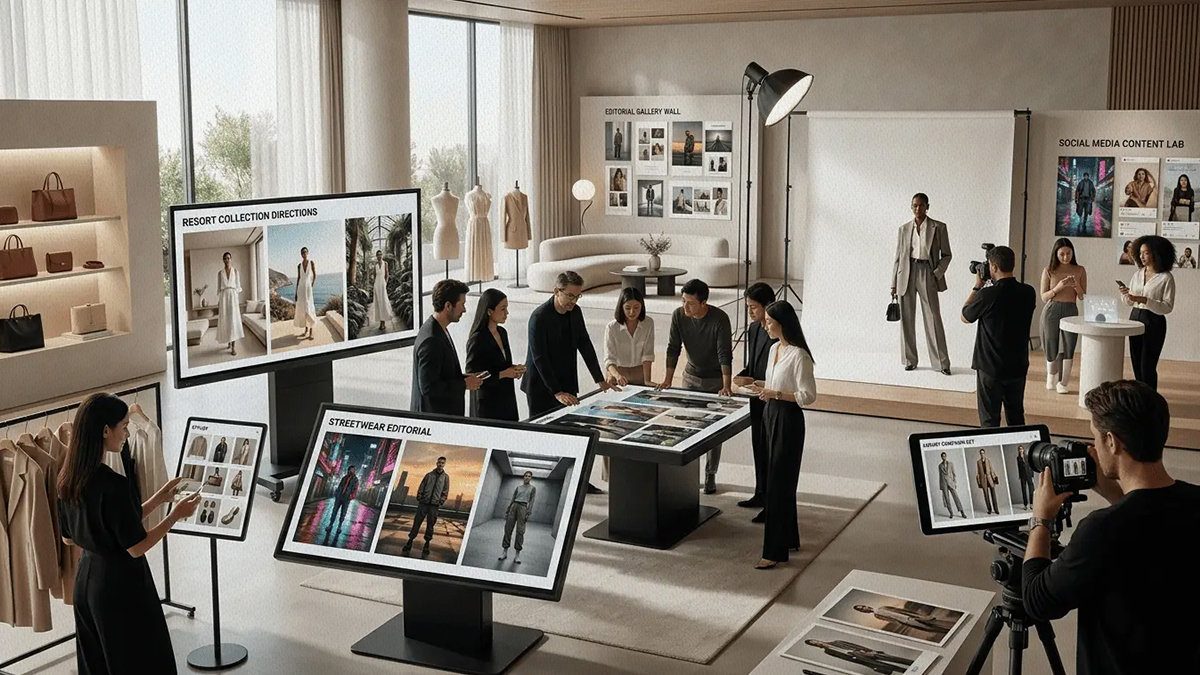
This is where the conversation around AI and fashion becomes more complicated.
The biggest threat may not be that AI replaces an entire profession. It may be that it removes the small jobs people once used to do to become good at that profession. A junior designer learns by sketching and watching senior designers reject ideas. A young photographer learns by assisting on shoots. A copywriter learns by producing product descriptions. An assistant buyer studies line sheets and watches inventory move.
Individually, those tasks can look insignificant. Collectively, they form the apprenticeship.
When software begins handling more of that baseline work, companies have less reason to employ as many people to perform it. The problem is not simply fewer tasks, but fewer opportunities to develop judgment through repetition, failure, correction, and observation.
People entering fashion may increasingly be expected to arrive with the judgment previous generations developed through years of execution. But where does that judgment come from if the industry removes the work through which people were supposed to develop it?
The result would not necessarily be a world without fashion professionals. It could be a world with fewer ways to become one, with fewer highly skilled people using increasingly powerful tools and fewer newcomers getting the chance to learn underneath them.
The New Fashion Worker
Knowing how to use AI will matter, but simply knowing how to prompt a machine will not be enough. If everyone has access to similar tools, technical fluency quickly becomes the baseline rather than the advantage.
The real advantage comes from knowing what to ask for, recognizing when the answer is wrong, understanding the brand and the culture around it, and knowing when the algorithm’s recommendation should be ignored. Tomorrow’s fashion professional may need an unusual combination of creative judgment, visual literacy, cultural awareness, data fluency, technology skills, and enough understanding of the craft to recognize when a machine-generated idea cannot survive contact with real fabric, real bodies, or real consumers.
AI becomes another instrument in the studio. The valuable person is the one who knows when to use it and when to put it down.
So, Can AI Steal Fashion Jobs?
AI is unlikely to walk into a fashion studio and replace every designer, photographer, model, writer, buyer, or creative director overnight. The disruption is quieter than that.
One person with the right tools can increasingly accomplish work that once required several. At the same time, the disappearance of routine and entry-level tasks can weaken the traditional apprenticeship through which creative professionals develop their instincts. Together, those forces can change the fashion labor market without completely replacing any single profession.
And this brings the conversation back to where fashion has always begun: taste.
Fashion is not only about understanding what people want. Sometimes, it is about deciding what they will want next. That requires more than pattern recognition. It requires cultural awareness, context, restraint, curiosity, and the confidence to reject the obvious.
In a fashion industry where everyone can generate, making something becomes easier while knowing what is worth keeping becomes harder. And when almost everything can be made, taste may ultimately mean knowing what should exist.
Words by Aljhelyn Piador
Also published in GADGETS MAGAZINE Volume 27 Issue No. 2