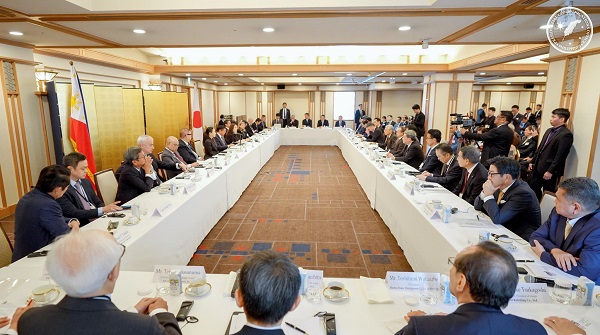

Toyota has reaffirmed its long-term commitment to the Philippines, highlighting the role of manufacturing, exports, supplier development, and sustainable mobility in strengthening economic ties between Japan and the Philippines.
During the recent Tokyo Business Roundtable attended by President Ferdinand R. Marcos Jr. and Japanese business leaders, the company emphasized the importance of continued industrial collaboration in building a more resilient and future-ready economic partnership between the two countries.
Manufacturing remains at the core
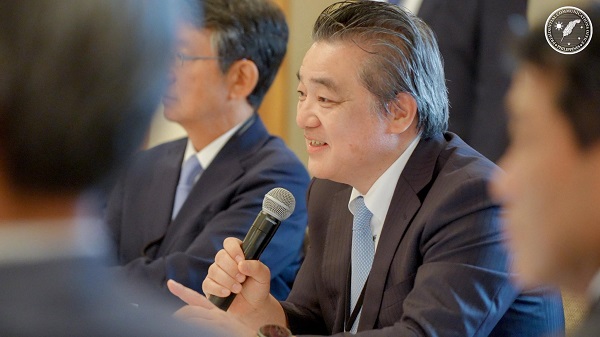
Representing Toyota Motor Corporation at the roundtable, Asia Region chief executive officer Masahiko Maeda highlighted the company’s nearly four decades of operations in the Philippines and its continuing support for local industrial development.
Toyota continues to maintain Complete Knocked-Down (CKD) manufacturing operations in the country through Toyota Motor Philippines Corporation. Locally produced models include the Vios, Innova, and Tamaraw, the latter designed to support MSMEs and contribute to public transport modernization.
Maeda also underscored the importance of government support for local automotive manufacturing across various vehicle technologies, including internal combustion engine vehicles, which remain closely linked to domestic supply chains and mobility needs.
Strengthening local suppliers and exports
A key component of Toyota’s local ecosystem is Toyota Aisin Philippines, Inc., which manufactures automotive transmissions for export markets.
Through its operations in the Philippines, Toyota Aisin Philippines has cumulatively exported manual transmissions valued at more than USD3.8 billion to destinations across Asia, Africa, and Latin America. The achievement highlights the country’s role within Toyota’s global manufacturing network and automotive value chain.
Toyota noted that continued support for localization can help strengthen supplier development, attract investments, create jobs, and provide additional opportunities for MSMEs.
Supporting cleaner mobility through biofuels
Toyota also highlighted the role of biofuels within the broader Asian Zero Emission Community (AZEC) framework.
The company identified biofuel blends such as E20 and B5 as practical pathways toward improving energy security while supporting local agricultural sectors. By integrating farmers into the energy supply chain, biofuels can contribute to cleaner mobility while helping ensure that decarbonization efforts remain economically inclusive and locally beneficial.
Toyota said this approach supports a balanced transition toward lower-emission transportation solutions while maintaining energy resilience.
A long-term partnership
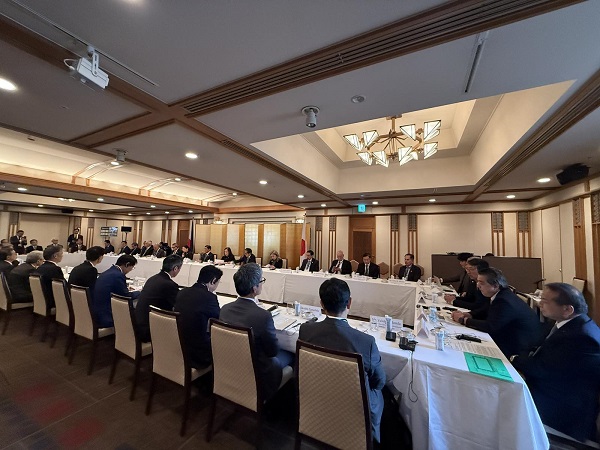
The roundtable concluded with participating Japanese companies expressing confidence in the Philippines’ economic direction.
As the Philippines and Japan continue to celebrate decades of diplomatic and economic cooperation, Toyota reiterated its commitment to supporting industrial growth, mobility development, and long-term economic collaboration between the two nations.