

Speed and convenience make our modern world feel effortless. We tap to autofill passwords, glance to approve payments, and log in seamlessly without missing a beat. Technology makes life easier, but every shortcut can come with a hidden cost.
Every time we prioritize speed over scrutiny, we leave a digital door slightly open. The very features designed to simplify our lives can also encourage habits that scammers take advantage of, sometimes before we realize what is happening.
THE PRICE OF EVERYDAY SPEED
We all love the easy side of tech. It saves us time and gives us the feeling of seamless efficiency. But convenience has never been free. In our rush to shave seconds off everyday interactions, we rarely ask what we are giving up in return.
Every automated feature feels like a small gift from software developers. Autofilling our home address saves a dozen keystrokes, while saving credit card details on a favorite retail site turns buying a gift into a two-second task. Over time, these subtle design choices build a subconscious mental model where digital experiences should always be free of hurdles. When an online interaction suddenly requires extra steps, such as multi-factor authentication or re-entering a security code, it often triggers mild annoyance rather than reassurance.
This mindset creates an opportunity for online scammers. They design fake messages and links to look like the apps and services we already use because they know we tend to take the easiest path. When a fake message asks us to “Click here to confirm your address,” we may click without thinking because it matches our daily habits. Moving too fast can make us miss warning signs and become easier targets for scams.
Today’s online security threats are not always about hackers directly breaking through security defenses. Sometimes, scammers don’t need to break in; they can trick us into giving them what they want. As artificial intelligence makes fake messages more convincing, our habit of trusting quick and familiar interactions can leave us vulnerable.
WHY HUMAN BEHAVIOR IS THE ULTIMATE TARGET
To understand how many scams happen, we need to focus not only on computer code but also on human habits and psychology.
Modern apps and devices have strong security measures that can make some direct technical attacks more difficult. Knowing this, scammers can take another approach: instead of trying to break through a secure system, they focus on tricking the person using it.
Human psychology relies on predictable shortcuts to process massive amounts of information every day. We trust familiar company logos, react quickly to urgent messages, and follow instructions from official-looking sources. Scammers exploit these exact habits. By creating fake situations that play on fear, curiosity, or urgency, they try to make us react emotionally without thinking things through.
Recognizing that our own behavior is an important part of security is one step toward staying safer online.
THE TRUE COST OF MAXIMUM CONVENIENCE
Security sometimes relies on helpful speed bumps. Typing a password or waiting for a confirmation code can give us a moment to think and stay aware. But as apps compete to become faster and easier to use, almost any delay can feel like a problem. Password managers can fill in our details, single-click logins simplify sign-ins, and instant checkout features can finish purchases in seconds.
These tools are not necessarily unsafe. In fact, features such as password managers and secure authentication can improve security. The problem comes when we become so used to moving quickly that we stop paying attention to what we are approving.
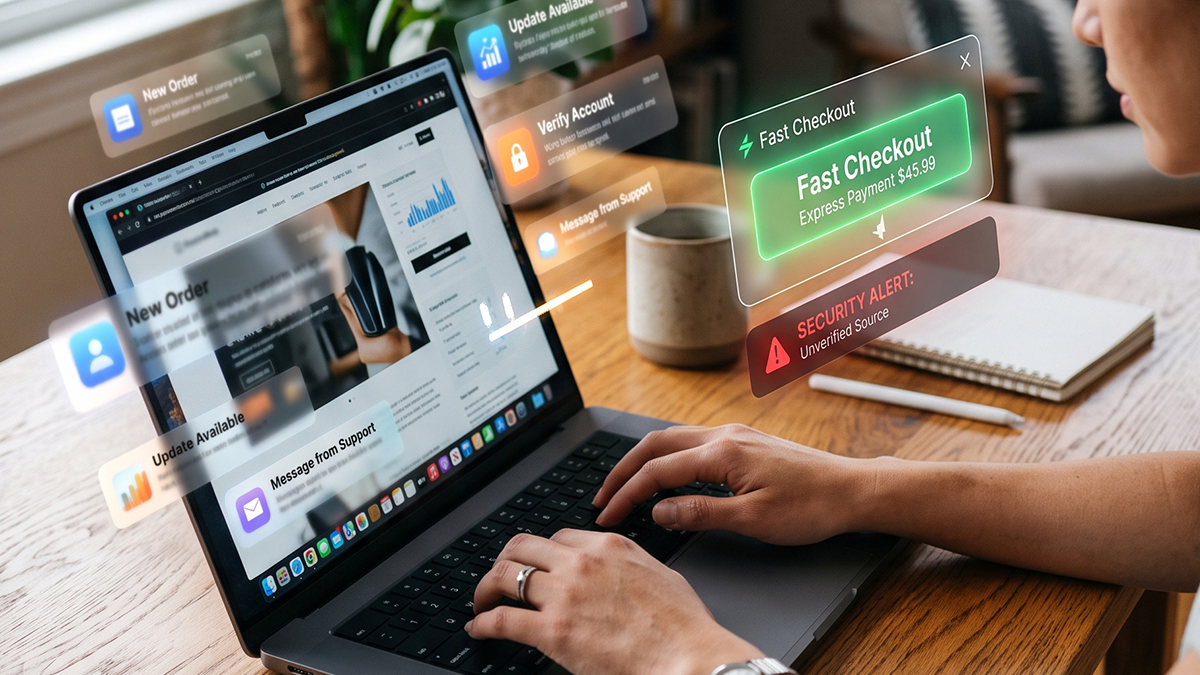
When pop-up prompts ask for access or permissions, muscle memory can take over before we evaluate the request. Scammers can exploit this habit by copying familiar checkout pages, login screens, and standard prompts. In a world where everything happens instantly, slowing down can feel like an inconvenience we would rather avoid.
In app design, “friction” means any step that slows a user down. For years, tech companies have tried to eliminate unnecessary friction to keep digital experiences smooth and easy. If checking out takes five steps instead of one, some people simply give up.
However, some intentional pauses can serve a protective purpose by giving us a few extra seconds to double-check what we are doing. Expecting everything to happen instantly can lower our guard. Viewing certain security pauses as useful protections rather than annoying delays can help us stay more aware.
HOW AI EXPLOITS OUR DAILY HABITS
Advances in artificial intelligence have changed how convincing scams can become. Scam emails were once easier to spot because of bad grammar, awkward wording, or other obvious mistakes. Today, AI tools can generate more natural and polished messages that resemble official bank notices or work communications.
AI can also create convincing synthetic audio and video. When scammers combine these tools with personal information gathered online and our habit of responding quickly to familiar people, an urgent message that appears to come from a manager or family member can become much harder to judge.
The danger is not just AI technology itself, but how easily it can take advantage of information we make publicly available and behaviors we already have.
THE PSYCHOLOGY BEHIND MISPLACED DIGITAL TRUST
Biometric sign-ins such as face recognition and fingerprint scans were introduced as a convenient and secure alternative to relying entirely on traditional passwords.
As face and fingerprint scans became standard for everyday actions such as opening banking apps or approving payments, however, the process became almost automatic. Scanning a face or tapping a fingerprint is now so routine that we may not always stop to read what we are actually approving.
That does not make biometric authentication unsafe. The problem is treating every biometric prompt as proof that the action behind it is trustworthy. Biometrics can verify that we authorized an action, but they cannot tell us whether the request that led to it was legitimate.
Because fingerprints and faces are unique, biometrics can also create a strong sense of security. But biometric authentication is only one layer of protection. It cannot stop every suspicious website, malicious app, or deceptive request from reaching us.
Relying on any single security measure can create overconfidence and make other online risks easier to overlook.
THE SUBTLE RISKS OF CONSTANT DIGITAL CONNECTIVITY
Modern phones, smartwatches, and home devices rely on constant internet connections to update in real time. Devices automatically join familiar Wi-Fi networks, scan for nearby Bluetooth devices, and refresh background data without requiring much action from us. This keeps everything ready whenever we need it.
However, constant connectivity also means having more networks, apps, permissions, and services to keep secure. Public Wi-Fi networks require caution, software and apps need to stay updated, and permissions we granted in the past may no longer be necessary.
For years, online security advice focused heavily on antivirus software, firewalls, and other technical protection. Software security still matters, but it is only part of the picture. Our daily habits and routines matter too.
Is it the app maker’s job to protect users from deceptive designs, or is it our own duty to double-check our habits? Responsibility becomes complicated when convenience is built directly into almost every app we use.
ACTIONABLE STEPS TOWARD BETTER HABITS
Improving security requires paying more attention to our habits, not just securing our devices. Many scams succeed not because someone defeats sophisticated security technology, but because we move too quickly or trust something automatically.
Building safer habits means adding small, intentional pauses back into our routine. It means pausing to review unexpected face or fingerprint prompts, double-checking unusual payment requests through a separate contact method, and taking a few minutes to review device privacy settings and remove app permissions we no longer use.
This doesn’t mean giving up password managers, biometrics, or the other tools that make work and daily life easier. These technologies can provide both convenience and security when used properly. The goal is simply to avoid letting convenience turn into automatic trust.
In a digital world designed for speed, staying secure sometimes means slowing down long enough to notice when something doesn’t feel right. By developing simple habits such as reviewing permissions, accepting useful security pauses, and treating unexpected or urgent requests with healthy skepticism, we can enjoy the convenience of modern technology without giving up control of our security.
Words by Phia Manuell Layoso
Also published in GADGETS MAGAZINE Volume 27 Issue No. 3