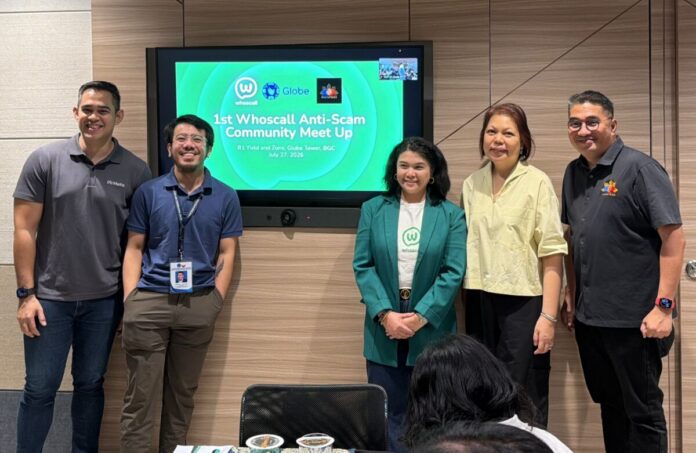

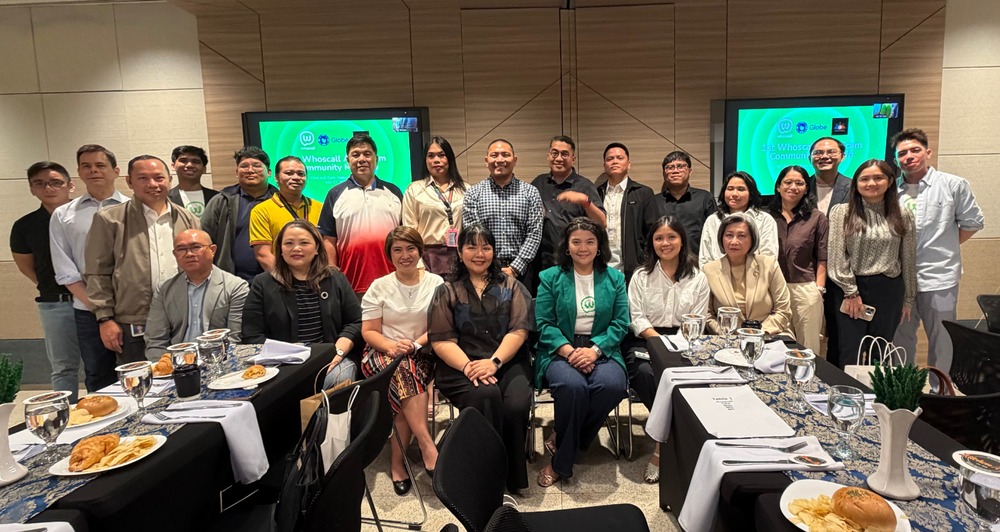
Whoscall convened its first Anti-Scam Community Meet-Up at The Globe Tower in Bonifacio Global City, bringing together government agencies, financial institutions, telecommunications companies, technology firms, academe, professional associations, and advocacy groups to strengthen cooperation against digital scams.
The event was held in collaboration with Globe Telecom and ScamWatch Pilipinas, with support from the Cybercrime Investigation and Coordinating Center and Meta. It forms part of Whoscall’s broader “Know the Unknown” campaign, which promotes tools for checking suspicious URLs, identifying potentially fraudulent communications, and reporting scam activity.
Building a wider anti-scam alliance
Whoscall said the meet-up was designed to strengthen partnerships, improve knowledge sharing on scam trends and prevention strategies, gather insights that could improve anti-scam solutions, and expand the community working to make digital services safer.
The initiative comes amid what Whoscall describes as a continuing high level of scam activity in the Philippines, citing a suspected scam rate of 4.1% that it says has remained above international averages for six consecutive years. The release, however, does not provide the underlying study methodology or comparative dataset for that figure.
“This first Anti-Scam Community Meet-Up is a landmark moment. For the first time, we are enjoining government, private sector, and communities in one ecosystem to fight scams,” said Mel Migriño, country head and general manager of Gogolook Philippines. She said the company aims to expand the anti-scam community, strengthen enterprise protection, and support government efforts against scams.
Globe highlights customer protection
Yoly Crisanto, chief sustainability and corporate communications officer of Globe Telecom Inc., highlighted Globe’s GoSafe program, which focuses on customer education, security features, and protection measures.
“The First Anti-Scam Community Meet-Up demonstrates how partnerships can empower communities and stakeholders to take control of their digital safety,” Crisanto said. “By joining forces with Whoscall along with ScamWatch Pilipinas, we are extending our commitment to help Filipinos navigate the digital world safely and confidently.”
Globe also presented GoSafe’s security features through Derick Adil, head of AI and privacy governance at Globe, while Gio Tingson, head of public policy at Meta, discussed the platform’s detection technologies and user education initiatives.
ScamWatch Pilipinas calls for practical tools
Jocel De Guzman, co-founder of ScamWatch Pilipinas, emphasized that awareness campaigns need to be paired with tools that allow users to recognize, report, and avoid scams.
“Scam awareness is not enough. Communities must not only understand how scams work but also be equipped with practical tools that allow them to fight back,” De Guzman said. He described Whoscall as part of ScamWatch Pilipinas’ Anti-Scam Quad Model, which brings together government, private sector, communities, and individuals.
The release says Whoscall can help users identify suspicious calls and messages, detect potential scams, and report threats, while its URL-scanning features are designed to help users assess potentially risky links.
CICC previews National Anti-Scam Hub
Paulo C. Ullado, director III at the Office of the Deputy Executive Director of the Cybercrime Investigation and Coordinating Center, also shared updates on the country’s scam landscape and the upcoming National Anti-Scam Hub.
The planned hub is intended to centralize inter-agency coordination, scam reporting, and response capabilities. The source does not provide a launch date, operating framework, or detailed implementation timeline for the initiative.
The meet-up concluded with networking and community engagement sessions, allowing participants from the public and private sectors to exchange ideas and explore possible future collaborations.