
The expanded collaboration aims to help Philippine enterprises, growing businesses, and educational institutions move from AI experimentation toward practical, organization-wide adoption.
As AI adoption accelerates, the challenge for organizations is increasingly shifting from access to execution: identifying the right workflows, helping people adopt new ways of working, and translating AI into measurable business outcomes.
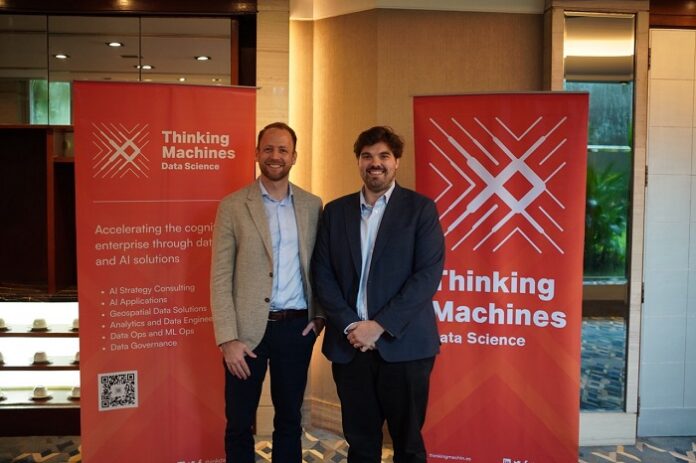
At a recent media briefing in Makati City, Thinking Machines and OpenAI discussed what Thinking Machines’ recognition as an OpenAI Advanced Partner means for Philippine organizations. The expanded collaboration aims to help enterprises, growing businesses, and educational institutions move from individual experimentation to secure, practical AI adoption.
OpenAI’s Partner Network connects organizations with partners that bring industry expertise, technical capability, deployment experience, and customer relationships. Thinking Machines is one of 30 companies worldwide recognized as an OpenAI Advanced Partner, according to the supplied material, reflecting its technical capabilities, delivery track record, and ability to support customers with local expertise.
The recognition also reflects Thinking Machines’ position that world-class AI capability can be built in the Philippines and applied to business and societal challenges.
“Being recognized as an OpenAI Advanced Partner is an important validation of the capability our team has built over the last decade. What excites me even more is what comes next,” said Niek van Veen, vice president for commercial at Thinking Machines.
“Expanding our work together through ChatGPT Business and ChatGPT Edu enables us to support more organizations, from growing businesses to educational institutions, while continuing to help enterprises deploy AI at scale and developing Filipino talent.”
From adoption to enterprise transformation
AI is increasingly becoming part of how people work in the Philippines. The source states that 40% of ChatGPT messages in the country are work-related, creating an opportunity for organizations to move from individual experimentation toward coordinated, organization-wide AI capability.
As AI tools become more capable, organizations are also looking beyond individual assistance toward agentic workflows that can improve how teams make decisions, serve customers, and complete work. For Philippine businesses, the opportunity is to turn individual AI use into enterprise-wide capability, with an emphasis on practical implementation, measurable productivity gains, and responsible scaling.
Thinking Machines works with leaders and teams across different industries to identify high-value workflows, build AI fluency, redesign processes, and deploy AI within existing data, governance, and operating environments.
“AI is easy to experiment with; transforming an organization with it is harder,” van Veen said. “The opportunity now is to turn familiarity with AI into organizational capability — embedding it into the way businesses operate, make decisions, and create value.”
For many organizations, the central challenge is therefore no longer simply gaining access to capable AI models. It is selecting the right workflows, integrating AI into existing systems, and helping employees adopt new ways of working.
Making practical AI adoption accessible to MSMEs
Thinking Machines and OpenAI are also expanding their work together to reach a broader range of organizations through ChatGPT Business.
ChatGPT Business provides growing teams with a secure workspace, centralized administration, and shared access to ChatGPT. For Thinking Machines, this creates an opportunity to help more Philippine businesses apply AI to concrete workflows across marketing, sales, finance, operations, and management.
The focus is practical adoption: helping teams begin with useful work, build confidence, and identify areas where AI can create measurable value.
Preparing Filipino talent for an AI-enabled economy
The expanded collaboration also includes ChatGPT Edu, OpenAI’s offering for educational institutions. It is designed to help schools deploy AI across students, faculty, researchers, and campus operations while providing security and administrative controls.
Thinking Machines works with educational institutions through programs, workshops, and local case studies that demonstrate responsible and effective applications of AI in teaching, learning, research, and operations.
Turning AI capability into outcomes
More than two million businesses globally are now building with OpenAI, according to the source. As organizations adopt AI, trusted partners can help translate frontier capabilities into secure, practical deployments suited to local needs.
“The Philippines is already among the top 15 markets globally for ChatGPT users, reflecting Filipinos’ openness to new technology and enthusiasm for finding practical ways to use it,” said Mark Jeffrey, director of partnerships for Southeast Asia and Taiwan at OpenAI.
“We see enormous potential for AI to strengthen education, transform customer experiences, equip more workers with new skills and create opportunities for local entrepreneurs.”
Jeffrey added: “Our partnership with Thinking Machines brings together OpenAI’s frontier AI capabilities and the local expertise organizations need to put AI to work responsibly and effectively. Together, we can help Philippine organizations move beyond exploring what AI can do and begin delivering tangible value for their employees, customers and communities.”
Thinking Machines supports Philippine businesses and educational institutions through enterprise AI consulting, ChatGPT Business adoption for MSMEs, and education and capability-building initiatives. Together, these offerings are intended to help organizations move beyond isolated experimentation and embed AI more deeply into how people learn, work, and make decisions.