
Buying an air conditioner seems simple enough until you actually have to pick one. Most people start with brand, horsepower and price, but the type of aircon matters just as much. It affects where you can install it, how noisy it is, what it costs to fit and what sort of aircon service and maintenance it will need later.
A 1.5HP window unit and a 1.5HP split-type unit may have similar cooling capacity on paper, but they are quite different to live with.
For most homes and smaller commercial spaces in the Philippines, the choice comes down to window, split or cassette.
Window-Type Air Conditioners
Window units are the straightforward option. The compressor, condenser, evaporator and fan all sit inside one casing, which goes through an opening in the wall or window.
They work well in smaller bedrooms, rentals and older homes that already have an aircon opening. There is no separate outdoor condenser to install and fitting one is usually cheaper than installing a split system.
The trade-off is noise. The compressor is effectively sitting in the room with you, so even newer inverter models tend to be more noticeable than split units. You also need a suitable opening in the first place.
If that opening already exists and you simply want an affordable way to cool a small room, a window unit still makes plenty of sense.
Split-Type Air Conditioners
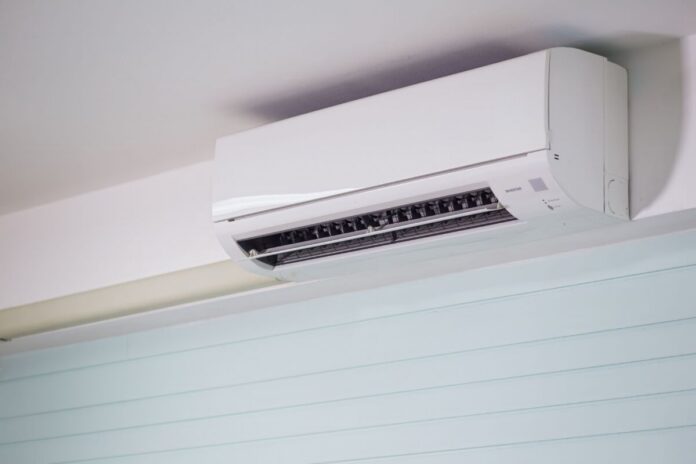
Split systems separate the indoor and outdoor parts of the air conditioner. The compressor and condenser sit outside, which keeps much of the mechanical noise out of the room.
That is one reason they are now common in bedrooms, condos, living rooms and offices. The indoor unit can also be positioned more neatly than a window unit.
Installation takes more work. Refrigerant lines, wiring and drainage have to run between the two units, while the condenser needs enough space and airflow outside.
A poor installation can undo some of the benefit of buying a decent unit. Bad drainage can cause leaks, poor pipework can affect cooling and a condenser wedged into a cramped, hot corner has to work harder to get rid of heat.
For bedrooms and living areas, split systems are usually the easier option to live with if the higher installation cost is not a problem.
Cassette Air Conditioners
Cassette units are the square systems fitted into ceilings, commonly seen in offices, restaurants and larger commercial spaces.
They are useful where cool air needs to spread across a wider area. Rather than blowing mainly from one wall, many cassette systems push air in several directions.
The ceiling has to be suitable, though. There needs to be enough space above it for the unit, pipework and drainage, with access left for servicing later.
In a large, open room, that setup can work very well. In an ordinary bedroom, it is usually more aircon than you need.
Window vs Split vs Cassette
| Type | Usually suits | Noise indoors | Installation | Main advantage |
| Window | Small rooms, rentals | Moderate | Simple | Lower cost |
| Split | Bedrooms, condos, living rooms | Low | Moderate | Quiet and flexible |
| Cassette | Offices, restaurants, large rooms | Low | More complex | Wider air distribution |
None of them is best for every room. The building and the space you are trying to cool should make most of the decision for you.
Condo and House Installations Aren’t Quite the Same
Condos can restrict where outdoor condensers are installed, where pipes and drainage lines run, and whether exterior walls can be drilled. Some buildings also require approved contractors.
It is worth checking those rules before ordering a split system. Finding out afterwards that the condenser cannot go where you planned is an avoidable nuisance.
Houses usually give you more freedom, although condenser placement still matters. Outdoor units need enough airflow around them to release heat properly.
Getting the Horsepower Right
Room size gets you roughly into the right range, but sunlight, ceiling height, occupancy and heat from appliances can change what you actually need.
A shaded room and a room of exactly the same size with large west-facing windows do not have the same cooling load.
Buying extra horsepower for the sake of it can work against you as well. An oversized unit may cool the room quickly, shut off, then start again soon afterwards. That repeated cycling can hurt efficiency and may do a poorer job of removing humidity.
Sizing guides are useful, but they should be treated as a starting point rather than a verdict.
The Installation Cost Is Part of the Price
The number on the price tag is only the cost of the machine.
A window unit going into an existing opening may need relatively little extra work. Split systems can require copper pipe, insulation, brackets, drainage and electrical work. Cassette systems may need ceiling work on top of that.
With split type aircon installation, the way the indoor and outdoor units are connected and positioned has a direct effect on how well the system works. Even a good unit can leak, cool poorly or use more power than it should if the installation is bad.
Then there is maintenance. Filters and coils get dirty, drain lines can clog and outdoor condensers collect dust and debris over time. None of it is unusual, but it is part of the real cost of owning the unit.
Which One Should You Get?
For a small bedroom, rental or room with an existing wall opening, a window unit is usually the simplest option.
For a bedroom, condo or living room where noise matters, a split system will normally make more sense.
For larger open spaces such as offices and restaurants, a cassette system is better suited to spreading cool air across the room.
After that, you can start comparing brands, inverter systems, energy ratings and features. Those things matter, but only once you have picked the right type of aircon for the space.