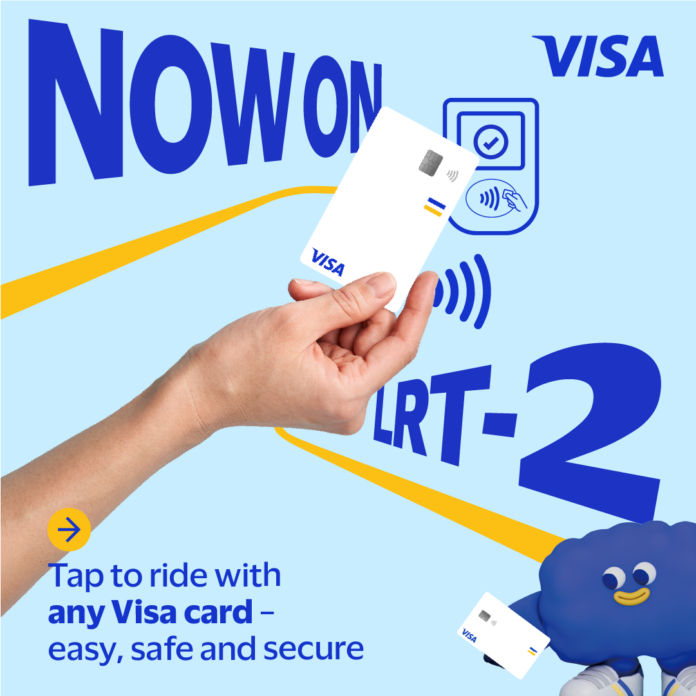

Visa has expanded its contactless fare collection system to the Manila Light Rail Transit Line 2 (LRT-2), bringing faster and more convenient digital payments to one of Metro Manila’s busiest rail corridors.
Developed in collaboration with the Department of Transportation (DOTr), Rizal Commercial Banking Corporation (RCBC), and other industry partners, the initiative marks Visa’s fourth cashless public transit project in the Philippines. It supports the country’s ongoing efforts to accelerate digital payments, improve urban mobility, and expand financial inclusion.
Modernizing one of Metro Manila’s busiest rail lines
The LRT holds an important place in Philippine transport history, with the original line becoming Southeast Asia’s first rapid transit system when it began operations in 1984. LRT-2, which opened in 2003 and has since expanded eastward toward Rizal Province, continues to serve a growing number of commuters across Metro Manila.
Passengers can now pay fares at all 13 LRT-2 stations using Visa cards, QR codes, and NFC-enabled mobile devices, reducing reliance on cash while making everyday commuting more seamless.
According to the Visa Economic Empowerment Institute, open-loop contactless transit systems can increase public transport ridership by up to 10 percent. With more than 160,000 daily commuters using LRT-2, the company says digital fare collection can help improve passenger flow while supporting broader economic activity.
Supporting financial inclusion and tourism
The LRT-2 rollout builds on Visa’s earlier contactless transit projects for MRT-3 and public bus systems in Cebu, Mandaue, and Bacolod.
Visa says the expansion aligns Metro Manila’s rail network with other major cities across the Asia-Pacific region, where commuters increasingly expect fast, card-based payment options. The company notes that 94 percent of riders across the region expect contactless payments to be available on public transport, while 45 percent say they would travel more often if fare payment were easier.
The system is also expected to benefit international visitors by allowing them to use familiar payment methods without purchasing dedicated transit cards.
Driving smarter mobility
According to Jeffrey Navarro, country manager of Visa Philippines, expanding automated fare collection across Metro Manila’s rail network reflects the company’s broader commitment to digital financial inclusion.
“The automated fare collection systems across Metro Manila’s three rail lines signifies Visa’s commitment toward accelerating financial inclusion, allowing both commuters and tourists to access digital payments while improving overall urban mobility in the Philippines. With expanded access to digital financial systems, we aim to support the government in boosting productivity while stimulating economic activity to fuel growth.”
Visa currently supports more than 870 tap-to-ride transit projects worldwide, helping cities modernize public transportation while promoting secure digital payments and more connected urban mobility.
In Summary
The expansion of Visa’s contactless payment system to LRT-2 marks another milestone in the Philippines’ transition toward smarter public transportation. By enabling commuters to pay with cards and NFC-enabled devices, the initiative simplifies daily travel while supporting broader goals around financial inclusion, tourism, and digital transformation.