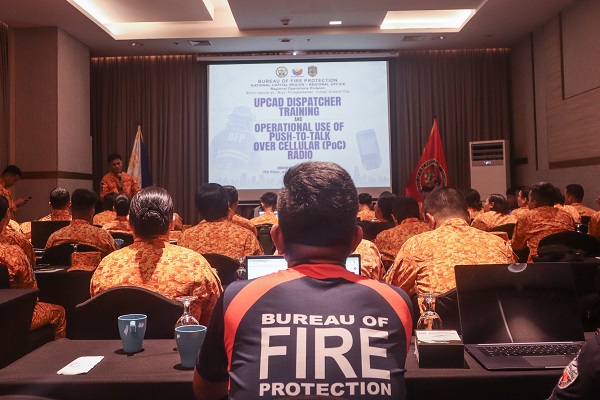

Two-day training covers new communication tools now integrated into the Unified 911 emergency response system
Super El Niño is here, according to the release. It crept in this October and will reach its peak progression in December, after which the country will experience a long dry spell, extreme heat, and rainfall deficiency.
From January to March, the crisis is expected to worsen significantly, with roughly 79 provinces projected to experience full drought. Critical water shortages and severe agricultural damage will follow. The situation will ease only in the second half of the year with the onset of the monsoon season. Meanwhile, the public is advised to prepare for water shortages, skyrocketing food prices, power outages, higher bills, and severe health risks.
TRAINING FOR THE EL NIÑO CRISIS
To prepare, the Bureau of Fire Protection-NCR (BFP-NCR) held a two-day training at Somerset Hotel in Makati City on the operational use of cutting-edge communication tools. The NEXiS Command and Unified Platform for Communications and Dispatch (UPCAD), along with Push-to-Talk over Cellular (PoC) devices, have been integrated into the Unified 911 emergency response system.
Under the leadership of BFP-NCR regional director FCSupt. Roy Roderick P. Aguto, the regional division initiated the training to strengthen its emergency communications and command-and-control capabilities. The preparations cover potential El Niño-related emergencies and the upcoming ASEAN 2026 Leaders’ Summit.
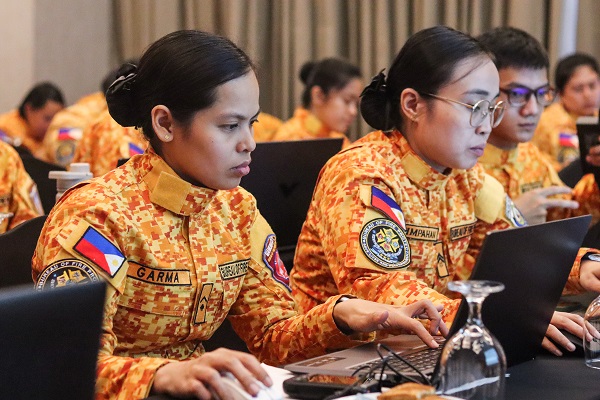
Personnel from the Regional Operations Division (ROD) and the Fire Communication Operations Section, including dispatchers and operational responders, learned how to use the tools. These are meant to help BFP and other emergency units respond quickly to fire and other emergencies during the El Niño crisis and beyond.
WHAT THE PUSH-TO-TALK DEVICES DO
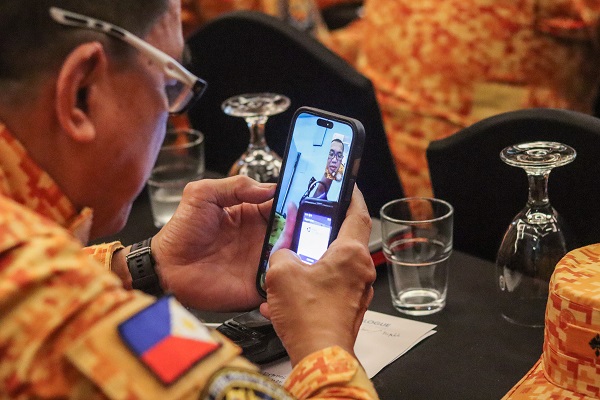
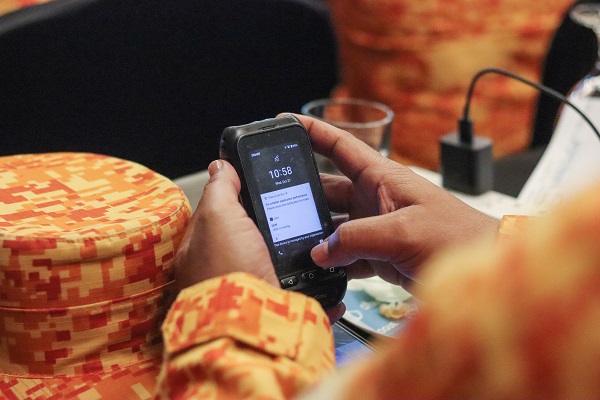
The training highlighted PoC functions such as group communication, live broadcasting, transmission of photos and videos, and real-time geolocation monitoring. The geolocation feature lets dispatchers find the nearest responders to an incident. Because photos and videos can be sent through the device, command centers can monitor field units, share incident information, and coordinate the response more efficiently.
FSupt. Elaine Baylon-Evangelista, chief of the Regional Operations Division, said the initiative is not simply about introducing new equipment but about strengthening operational discipline across the region.
“Radio communication should be a fundamental part of our firefighting operations, not just an option. Incident commanders need timely updates, dispatchers need accurate information, and responding personnel need to maintain communication with one another. We are strengthening our ability to coordinate resources, manage information, and maintain effective command and control during emergencies,” Baylon-Evangelista said.
FIXING THE LIMITS OF OLD RADIOS
According to Chief Fire Inspector Ely D. Timuat II, the PoC devices will solve one of the primary problems with the old radios. These rely on radio wave frequencies, which limit their reach within certain districts and create dead spots.
Far-flung areas in provinces or islands that have no radio frequencies, or places where internet and radio signals are down, will benefit from the advanced features of UPCAD (NEXiS Command). The units were already used and tested during the earthquakes in Mindanao.
Timuat said NEXiS Command would be valuable during El Niño for several reasons:
- Fast fire response: Its GPS tracking can pinpoint the exact location of spreading grass or house fires, so fire engines can be mobilized instantly to keep neighborhoods safe.
- Medical emergencies: Victims of heat stroke, severe dehydration, or cardiovascular distress can be attended to quickly, because emergency calls made through Unified 911 bypass the need to search for specific hospital lines.
- Local relief: Because the emergency communication system is connected to all local government units (LGUs), city or municipal rescue services can quickly respond to water or heat emergencies and distribute local relief.
NGA 911 ON THE TECHNOLOGY
NGA 911, the public safety technology provider associated with the devices, also discussed technical features intended to improve communication and information sharing among emergency responders.
“The handheld devices operate across 4G and 5G cellular networks, helping operatives stay connected even in areas with varying signal strengths. They have intelligent noise suppression features that enhance audio clarity, which is crucial during storms, fires, and other noisy environments. The system enables secure transmission of images and data so command centers get real-time visual context during emergencies. Additionally, its tiered communications feature allows life-threatening emergencies to take priority over lower-priority concerns,” said Robert Llaguno, NGA 911 country head.
The Unified Platform for Communications and Dispatch, through NEXiS Command, is part of NGA 911’s NEXiS Suite, which supports a more integrated approach to emergency communications. Public safety agencies get stronger connectivity, situational awareness, and coordination from dispatch to on-the-ground response.
“Those features are important during large-scale emergencies such as those anticipated during Super El Niño,” Llaguno said.
The technology is used in emergency response operations in the United States and Europe, including during the recent riots in France.