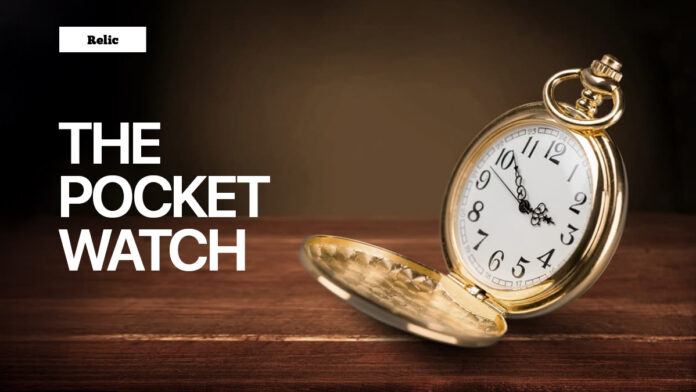

Today, clocks around the world can keep time accurate to fractions of a second, showing how timekeeping has changed over the years. Just slightly before that, everyone had their own concepts of time. I specifically remember some clocks being a few minutes faster than others (cue the school alarm being two minutes faster than my own watch). Timekeeping also blended with fashion, especially the pocket watch. In fact, some of these pocket watches are so rare or valuable they could easily fetch hundreds of thousands of dollars. But how did it come about, and why is it considered a fashion statement then (and now)?
Timekeeping is (pun intended) a tale as old as time itself. The sundial, considered one of the oldest ways of keeping time, dates back to around 1500 BC in Egypt. However, a wearable timekeeping device didn’t come around until around the 1500s (AD). This meant that almost 3,000 years passed between the actual act of timekeeping and a wearable timekeeping device. German clockmaker Peter Henlein is considered the inventor of the portable spring-driven watch. These early watches were heavy and worn around the neck. They were also part of more ornate jewelry, shaped differently than the watches we know today, and (like most tech) initially for the wealthy. On top of that, they were also wildly inaccurate, as watches could lose or gain minutes per day.
By the late 17th century, the invention of the balance spring had made pocket watches far more accurate. Craftspeople honed their trade to make more complex and ornate devices, making it a fashion statement for wealthy men in particular. These were carried in waistcoat pockets. However, a nagging issue that came with the pocket watch was dust accumulation. In damp climates, pocket watches were also subject to moisture damage, and let’s not forget physical shock. Dropping your pocket watch was far more damaging at the time than dropping your iPhone or Android phone today, as many were still handcrafted. This is also when the term “pocket watch” began to gain popularity.
In the 18th century, the pocket watch gained huge popularity in London, Geneva, Paris, and other cities. They were usually made out of gold, silver, enamel, other precious stones, and engraved metals. Some even included calendars, repeating mechanisms, moon phases, alarms, and even the time in multiple time zones. By this time period, Abraham-Louis Breguet was revolutionizing mechanical watchmaking through inventions such as the tourbillon in 1801, intended to reduce the effects of gravity on these ornate timepieces.
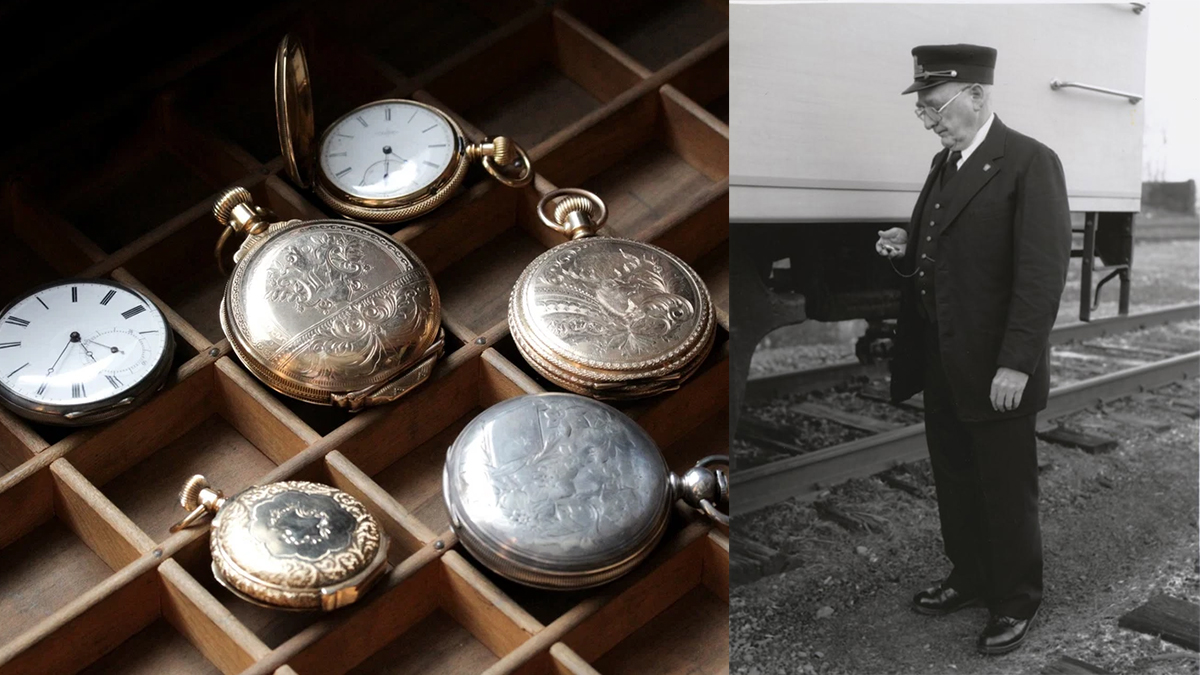
By the dawn of the Industrial Revolution in the 19th century, pocket watches shifted from individual craftsmanship to mass production. This meant that anyone (not just high society) could own a pocket watch. It was commonplace by the end of the century, and mainly for one reason: railroads. Before 1883, railroad stops in the United States set their own times, and railroads ran on them. For example, two cities in the same time zone (Seattle and San Francisco) today may have had times varying by a few minutes. Pocket watches were upgraded to account for railroads, and they became not only a fashion statement but also part of safety infrastructure and, by extension, economic lifelines.
By World War I, pocket watches began to fall out of favor as advances in technology led to the wristwatch. While wristwatches were initially intended for women, men also started wearing wristwatches in the 20th century. Between World War I and World War II, the pocket watch became more of a niche item, usually used by railroad workers, tradesmen, collectors, and older generations. By the 1960s, quartz technology shot the wristwatch to new heights, effectively relegating the pocket watch to a collector’s item. Some pocket watches, especially Breguet-made ones, have reportedly sold for USD100,000.
The pocket watch has often been called the world’s first wearable technology. While it served as a status symbol and later on as part of a railroad worker’s tools, it is important to remember that pocket watches made the man (or woman). If you have one, consider yourself an owner of an important piece of technology history.
Words by Jose Alvarez
Also published in GADGETS MAGAZINE Volume 27 Issue No. 2