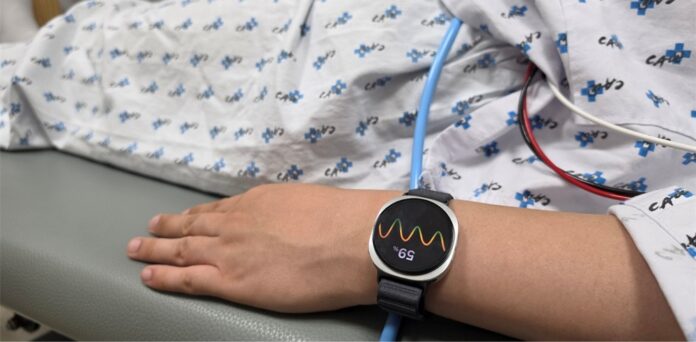

Samsung has announced a breakthrough that could change how we think about everyday health monitoring. In a joint clinical study with Chung-Ang University Gwangmyeong Hospital in South Korea, researchers successfully validated the Galaxy Watch6’s ability to predict vasovagal syncope (VVS) before it occurs, with clinically meaningful accuracy.
Vasovagal syncope is the medical term for fainting caused by a sudden drop in heart rate and blood pressure, often triggered by stress, heat, or extended standing. While a fainting spell is rarely life-threatening on its own, the resulting fall can cause fractures, concussions, and other serious injuries. That makes advance warning genuinely valuable.
How the Study Worked
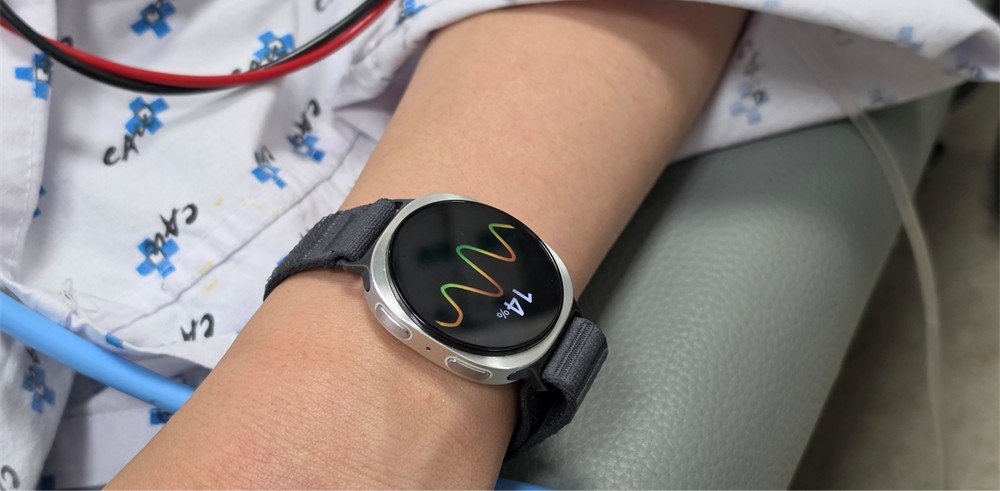
The research team, led by Professor Junhwan Cho of the Department of Cardiology, evaluated 132 patients with suspected VVS symptoms during medically induced fainting tests. Each patient wore a Galaxy Watch6 equipped with a photoplethysmography (PPG) sensor, which continuously tracked heart rate variability (HRV) data.
An AI algorithm then analyzed that HRV data in real time. The result: the system predicted an oncoming fainting episode up to five minutes before it occurred, achieving 84.6 percent accuracy, with a sensitivity of 90 percent and a specificity of 64 percent.
“Up to 40 percent of people experience vasovagal syncope over their lifetime, with one-third facing recurring episodes. An early warning could give patients advance time to get into a safe position or call for help, which would dramatically reduce secondary injuries,” said Professor Junhwan Cho, Department of Cardiology, Chung-Ang University Gwangmyeong Hospital.
From Reactive to Preventive Health
For Samsung, the study is proof of concept for a larger vision. The company has been positioning its Galaxy Watch lineup as a serious health monitoring platform, and this research represents exactly the kind of real-world, clinically validated use case it has been building toward.
“This study is an example of how wearable technology can help shift healthcare from being designed for post-care to a model of preventive care,” said Jongmin Choi, head of Health R&D Group at Samsung Electronics’ Mobile eXperience Business. “We are committed to driving technological innovation that empowers our users to lead healthier everyday lives.”
The findings were published in Volume 7, Issue 4 of the European Heart Journal: Digital Health, one of the leading journals in the field. It is the first published study to demonstrate that a commercial smartwatch can provide early syncope prediction.
What This Means for Galaxy Watch Users
The study was conducted using the Galaxy Watch6, but Samsung says it intends to continue advancing the health monitoring capabilities across its wearable lineup. The company plans to expand collaboration with medical institutions and accelerate the development of personalized, preventive health solutions.
No release date has been announced for a consumer-facing fainting prediction feature, but the clinical validation marks a significant step toward it. For Galaxy Watch owners, especially those with a history of fainting or cardiovascular conditions, it is worth watching this space closely.
Check out the latest Galaxy Watch models at Samsung Philippines.