

Chronic obstructive pulmonary disease (COPD) is a progressive respiratory condition that slowly limits airflow and makes breathing more difficult over time. It develops when long-term exposure to lung irritants, such as cigarette smoke or environmental pollutants, causes lasting damage to the airways and lung tissue. Because this damage builds up gradually, the condition requires ongoing management rather than a one-time treatment approach.
Medication plays a central role in controlling COPD symptoms and reducing the frequency and severity of flare-ups, helping patients maintain a better quality of life. Because the disease affects the airways in different ways, doctors also prescribe different types of medication to address specific problems such as narrowed airways and inflammation. For this reason, treatment often involves combining several phases and therapies, carefully tailored to each individual’s symptoms and disease progression.
The following sections explore the main medication categories in more detail.
1. Bronchodilators
Bronchodilators serve as the foundation of COPD therapy because they directly target airflow limitation, which is the primary issue in the condition. These medications relax the smooth muscles surrounding the airways, which widens the air passages and thus improves airflow in and out of the lungs. As a result, patients experience reduced breathlessness and a greater ability to perform daily activities. Clinicians typically prescribe bronchodilators for both immediate relief and long-term maintenance, depending on symptom severity.
Short-Acting Bronchodilators (Rescue Medications)
Within this group, short-acting bronchodilators play a particularly important role when symptoms suddenly worsen. They provide rapid relief during episodes of acute breathlessness or sudden worsening of symptoms. These medications act within minutes and help restore airflow quickly, which makes them essential for emergency symptom control. One of the most widely used short-acting bronchodilators is salbutamol and healthcare providers often pair it with ipratropium for stronger relief during acute episodes.
Patients commonly rely on these types of bronchodilators during unexpected symptom flare-ups or before engaging in physical exertion that may trigger breathlessness. Although these drugs offer fast relief, they do not address underlying inflammation or long-term disease progression, which makes their role primarily supportive rather than curative.
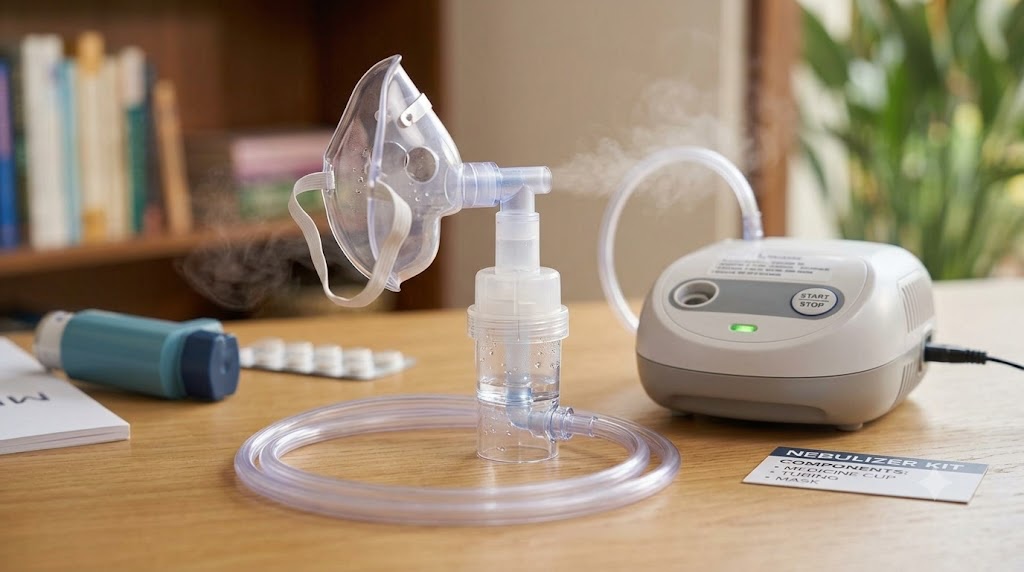
These medications are most often administered through inhalers, which provide a convenient and portable option for symptom management. Some individuals may also receive treatment through a nebulizer kit, particularly during severe flare-ups or when inhaler use becomes difficult. A nebulizer kit typically includes a nebulizer cup, tubing, and either a mouthpiece or mask that work together to convert liquid into a fine mist for inhalation. This method allows medication to reach the lungs without requiring the coordination needed for proper inhaler use.
Long-Acting Bronchodilators (Maintenance Therapy)
Alongside these quick-relief options, long-acting bronchodilators provide sustained airway relaxation and form the backbone of daily COPD management. These medications keep the airways open over an extended period, which helps reduce persistent symptoms such as chronic shortness of breath and chest tightness. Long-acting beta agonists (LABA) and long-acting muscarinic antagonists (LAMA), such as tiotropium, represent the two primary classes used in this category.
Healthcare providers often prescribe these medications for daily use to stabilize lung function and minimize symptom fluctuations. Over time, consistent use reduces the frequency of symptom exacerbations and improves overall quality of life. The long-acting nature of these drugs ensures continuous support, which distinguishes them from rescue medications that act only for short periods.
While inhalers remain the most common delivery method for maintenance therapy, nebulized formulations may benefit patients who have advanced COPD or difficulty coordinating inhaler techniques. In these situations, a nebulizer kit can help ensure consistent medication delivery and support adherence to long-term treatment plans.
2. Inhaled Corticosteroids
In some cases, improving airflow alone is not enough, which is why anti-inflammatory treatments such as inhaled corticosteroids (ICS) are introduced, targeting airway inflammation rather than directly improving airflow. Over time, the inflammation caused by COPD contributes to increased mucus production and airway narrowing, which can worsen breathing difficulties. ICS medications help reduce this inflammation and therefore play an important role in preventing symptom frequency and escalation.
Budesonide represents a commonly prescribed inhaled corticosteroid, particularly for patients who experience repeated flare-ups. Healthcare providers often combine ICS with bronchodilators to ensure both airway relaxation and inflammation control occur simultaneously.
3. Oral Medications for More Severe COPD
When inhaled therapies still do not provide sufficient control, oral medications may be added. These drugs work systemically, which means they affect inflammation throughout the body rather than focusing solely on the lungs. This broader mechanism can benefit patients with more complex or severe disease presentations.
Roflumilast is a phosphodiesterase-4 inhibitor commonly prescribed for patients with chronic bronchitis and frequent symptom manifestation. Healthcare providers typically use this medication as an add-on therapy rather than a replacement for inhaled treatments. Although it does not provide immediate symptom relief, it’s valuable in reducing long-term flare-up risk.
A Personalized Approach to COPD Care
Effective COPD management ultimately depends on finding a treatment plan that aligns with a patient’s symptoms and ability to use different medication delivery methods consistently. As clinical decisions become more personalized, the focus shifts toward selecting therapies that best support long-term breathing stability and day-to-day comfort.