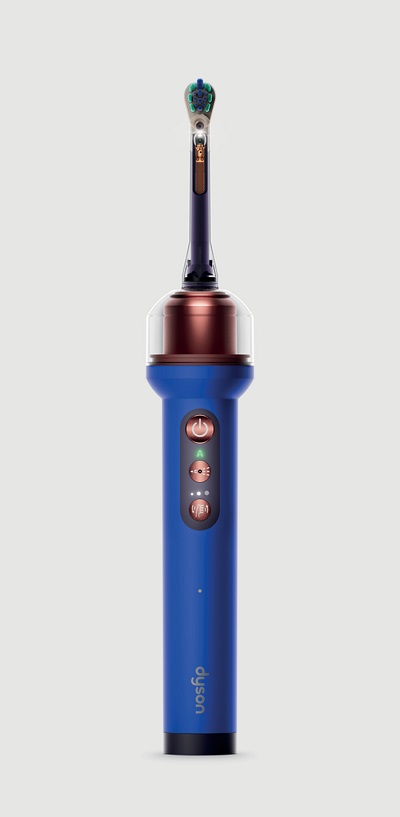

The connected toothbrush combines a macro camera, machine learning, variable sonic brushing, and targeted mouthrinse jetting in a single oral-care system.
Dyson has unveiled CameraJet, a new oral-care device that combines brushing, interdental cleaning, imaging, and connected guidance in a single system.
At the center of the device is a 100k-pixel macro camera powered by Dyson’s Gap Optical Targeting machine-learning system. The camera identifies, tracks, and predicts gaps between teeth in real time, triggering a precision burst of mouthrinse when a gap is detected.
Dyson says CameraJet is the result of six years of research and development involving 661 engineers, 38 patent filings, more than 470,000 dental images, and work with 30 dental professionals globally.
“Flossing is an awkward and time-consuming chore. Few of us do it even though we know we should,” said James Dyson, founder and chief engineer.
“We wanted to solve three fundamental problems: how to see those gaps, remove plaque, how to improve cleaning performance while brushing. By combining a camera, machine learning, precision fluid dynamics, advanced brushing technologies, connectivity and WiFi, Dyson CameraJet introduces an entirely new way to keep your mouth healthy.”
A camera that targets gaps between teeth
Gap Optical Targeting processes 28 live images per second and is designed to identify interdental spaces while the user brushes. Dyson says that within 100 milliseconds of detecting a gap, CameraJet can trigger a conical jet of mouthrinse aimed at the targeted area.
The device runs on 16 million lines of code, while its machine-learning system was developed using 470,000 dental images collected during development. The camera itself works with light and camera strobing at 257Hz, slightly out of sequence with the movement of the brush head.
Dyson says the system was designed around one of the recurring problems in everyday oral care: people often miss interdental spaces where plaque can accumulate.
A different approach to water jetting
Instead of the narrow “needle-type” stream used by many conventional water flossers, CameraJet uses a wider conical jet.
Dyson engineers developed and tested the jet using a proprietary proxy plaque created through a five-year collaboration with the National University of Singapore’s Faculty of Dentistry. In laboratory testing using that material, the broader spray was designed to sweep across plaque rather than simply pierce through it.
The jet operates with mouthrinse stored in a compact 12.5ml tank. A diaphragm pump and pressure chamber form what Dyson calls an Anti-Gravity Tank, designed to maintain consistent fluid delivery even when the toothbrush is tilted or held horizontally.
This is particularly relevant when cleaning behind teeth, where the device may no longer be held upright. Dyson says the system is engineered to avoid air pockets that could interrupt jetting.
Variable sonic brushing
CameraJet also introduces Dyson’s variable sonic oscillation technology.
During development, the company says engineers observed that bristles on some conventional sonic toothbrushes could stall when pressed against the tooth surface. Dyson’s system varies the angle of oscillation to keep the bristles moving and reduce that effect.
The brush head moves nearly 1,000 times per second and uses two bristle types. Firmer inner bristles are intended to help remove surface stains, while softer outer bristles clean along the gumline.
Each brush head also incorporates an RFID tag, allowing CameraJet to recognize which head is attached, track the number of cleans completed, and notify users when replacement is due. A sensitive brush-head variant will also be available for users with sensitive teeth and gums.
Dyson says external laboratory testing found that its variable sonic oscillation removed up to 69% more plaque than market-leading premium electric toothbrushes in hard-to-reach areas. The company notes that this result was obtained in laboratory testing using brush-only variable mode.
Toothpaste and mouth rinse designed for the system
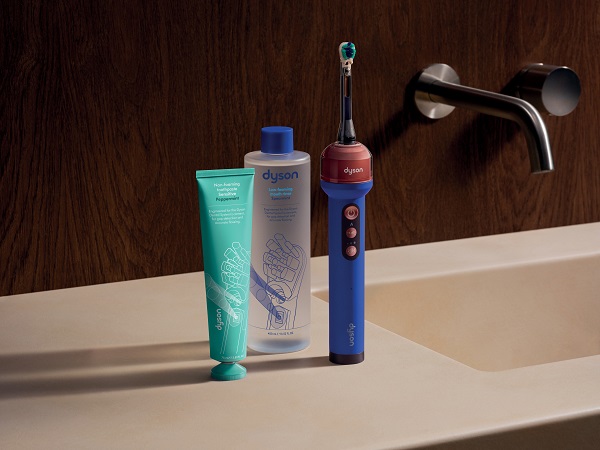
Dyson has also developed its own toothpaste and mouthrinse formulations to work with CameraJet.
The toothpaste is non-foaming and does not use sodium lauryl sulfate, helping keep foam away from the camera’s field of view. The mouthrinse is similarly formulated to produce less foam while being dispensed through the precision jet.
Both formulations contain sodium fluoride, along with phosphates and xylitol. The toothpaste and mouthrinse will be offered in Ginger Mint and Spearmint, while a Peppermint Sensitive toothpaste variant is intended for sensitive teeth.
Live viewing through MyDyson
CameraJet connects through 2.4GHz Wi-Fi and Bluetooth and integrates with the MyDyson app.
The camera can function as a live-view endoscope, allowing users to see inside their mouth while brushing. Dyson says the camera is active only during live viewing or automatic jetting, and images are neither recorded nor stored on the device or in the cloud.
The app also provides guided cleaning, brushing and flossing insights, coverage mapping, how-to videos, and personalized feedback. Users can choose between automatic gap detection and manual jetting and can adjust brushing intensity according to preference.
Charging and refilling in one dock
CameraJet comes with a docking station that both charges the device and refills its mouthrinse tank.
Dyson says the refill process takes three seconds at the touch of a button. The dock also stores the toothbrush upright, while a travel case is included for use away from home.
Philippine launch still to come
Consumers can register for updates through the Dyson Unveiled 2026 page, where the company will provide further information on Philippine availability.