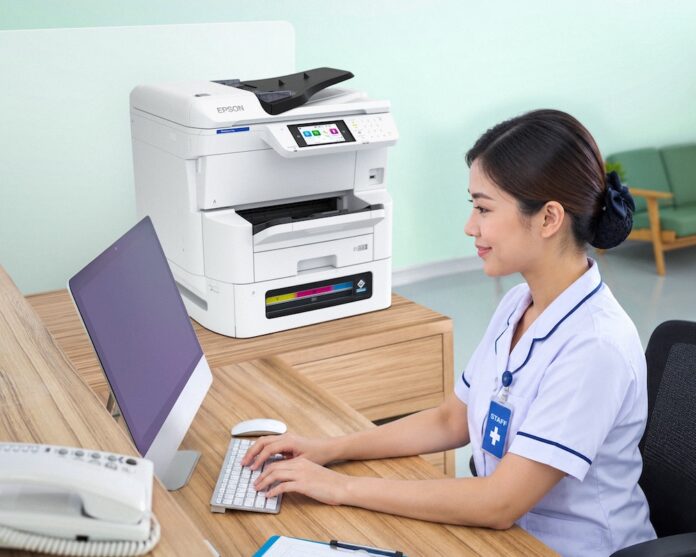

Healthcare teams manage a constant flow of information. Nurses handle admissions, doctors review charts and issue prescriptions, while administrative staff process records for billing, compliance, and patient care.
As more healthcare facilities move toward digital systems, the challenge isn’t simply adopting new technology; it’s making sure those tools fit into everyday clinical workflows. As electronic medical records become more important across hospitals and clinics, faster document capture and more efficient printing can reduce administrative friction and make information easier to access.
Faster record digitization at the point of care
For nurses, triage staff, and front-desk teams, converting physical charts into digital records can be one of the more repetitive parts of patient intake.
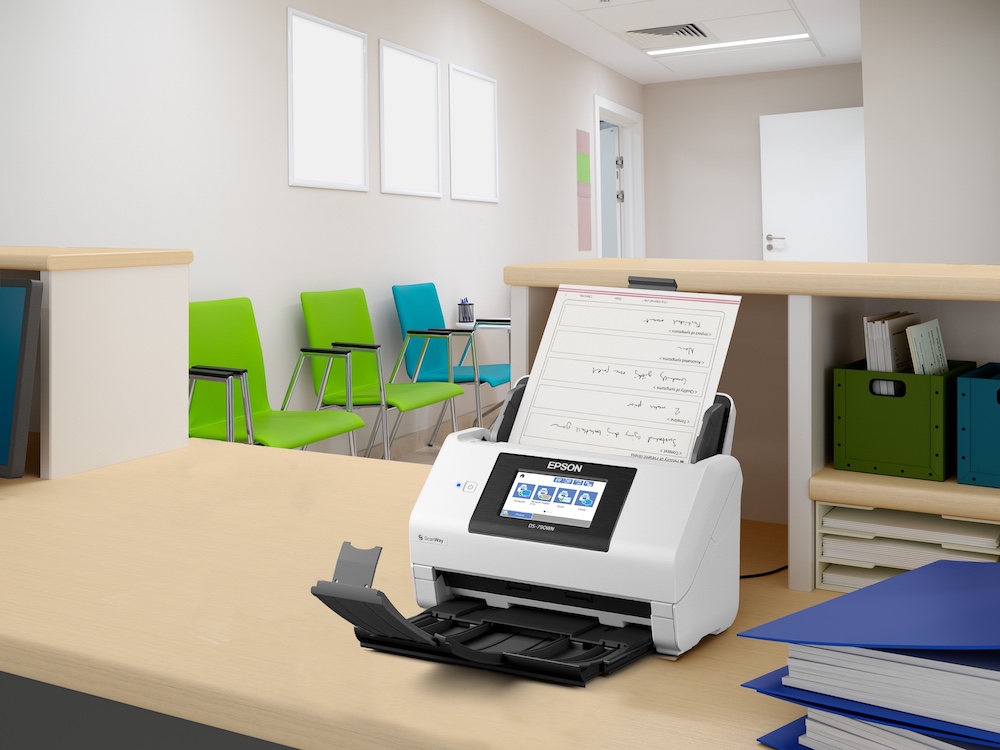
The Epson WorkForce DS-790WN standalone scanner simplifies that process with a 4.3-inch touchscreen and scanning speeds of up to 45 pages per minute. Patient charts, laboratory sheets, and identification cards can be scanned directly to network folders or cloud-based destinations without requiring a dedicated computer terminal.
Built-in authentication also helps control access when handling sensitive documents. In environments where patient information needs to move quickly between departments, digitizing records at the point of care can reduce manual handling and keep workflows moving.
Clearer documents for doctors and clinics
Even as patient histories move into electronic systems, printed documentation remains part of everyday medical practice. Prescriptions, medical certificates, diagnostic requests, and discharge summaries still need to be produced clearly and reliably.
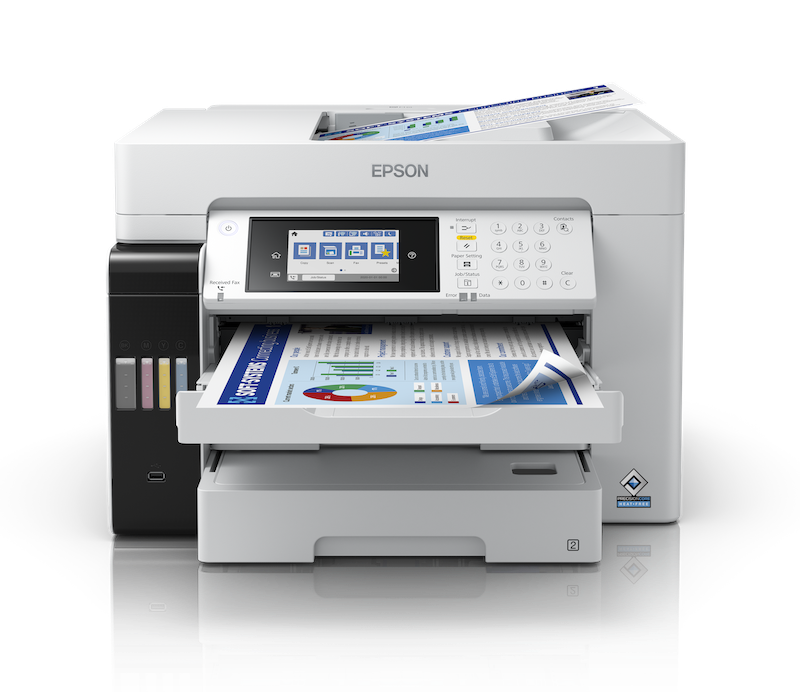
The Epson EcoTank L15160 is positioned for private practices and community clinics that need high-volume document printing with lower running costs. It can deliver up to 7,500 black pages per ink set and uses DURABrite pigment ink, which is designed to resist smudging and water exposure.
On-demand color printing can also reduce reliance on externally printed forms by allowing clinics to produce documents as needed. This gives smaller practices more flexibility while reducing the need to keep large stocks of pre-printed materials.
Lower-power printing for larger facilities
For hospitals and multi-specialty facilities, printing requirements often extend well beyond individual clinics and consulting rooms.
Epson WorkForce Enterprise and WorkForce Pro business inkjet systems use Heat-Free Technology, which can consume up to 85% less electricity than traditional laser copiers under the cited comparison conditions. Lower power requirements can be particularly relevant in facilities where multiple devices are used simultaneously throughout the day.
The systems are also designed to simplify consumable management by reducing dependence on multiple toner cartridges. Replacement-part waste can be reduced by up to 59%, supporting facilities that are trying to lower both operating costs and their environmental footprint.
Lessons from a healthcare deployment
Similar technology has already been deployed in healthcare environments outside the Philippines. Germany’s Diabetes Clinic Bad Mergentheim replaced laser copiers with business inkjet systems as part of its operations for more than 20,000 patients annually.
The deployment helped eliminate external form-printing costs, address facility power surges, and simplify supply management. While results will vary by workflow and scale, the example shows how document infrastructure can affect more than printing costs when deployed across a busy healthcare facility.
Keeping technology focused on care
“Technology in healthcare should serve the people providing the care, our doctors, nurses, healthcare staff, and hospital administrators,” said Noelle Gonzalez, head of marketing at Epson Philippines.
“By pairing simple, one-touch scanning with clean, low-cost Heat-Free printing, we are helping healthcare teams across the Philippines meet national digital mandates effortlessly, lower operational overhead, and focus on their true priority, which is delivering exceptional care to every patient.”
For healthcare organizations, the broader value lies in creating workflows where paper and digital systems work together more efficiently. Faster scanning, clearer document output, and lower-power printing can reduce administrative friction around patient care while letting clinical teams spend more time on the work that matters most.