

Maybe this is how we become Iron Man, for real.
In the movies, Tony Stark’s legendary suit is not just armor. It is a wearable system packed with sensors, processors, and responsive materials that react to his body and surroundings. While we are not flying around in powered exoskeletons anytime soon, the idea of technology embedded directly into what we wear is no longer science fiction.
Picture slipping into a jacket that knows your heart rate, a shirt that changes color when you are stressed, or pants that charge your phone as you walk. Your body heat could soon help power the clothes you wear, and some fabrics can already transmit data wirelessly simply by sensing your movements. Scientists have even developed fibers that function as electronic circuits, flexible enough to be washed and worn like everyday clothing. Smart garments can now track the body more continuously than many fitness watches, turning your wardrobe into a living, reactive interface. And this is just the beginning. Our clothes are about to get a whole lot smarter.
When Clothing Becomes Technology

These are not science fiction fantasies. They are the reality of e-textiles: fabrics embedded with sensors, conductive fibers, and microprocessors that allow clothing to sense, respond, and interact with the world around it.
The concept began to gain traction in the 1990s, when researchers explored wearable computing and sought ways to integrate technology more naturally into daily life. While smartwatches and fitness trackers brought health monitoring to our wrists, e-textiles push the idea further by embedding technology directly into the garments we wear. This innovation grew out of the need for more continuous health monitoring, hands-free human-computer interaction, and lightweight systems for fields such as sports, medicine, and defense.
By weaving conductive threads and miniature electronics into fabrics, e-textiles allow clothing to collect physiological or environmental data and transmit it in real time to smartphones or connected devices. In this way, ordinary garments become wearable computing platforms, where materials science, textile engineering, and digital technology converge.
Smart Textiles in the Philippines
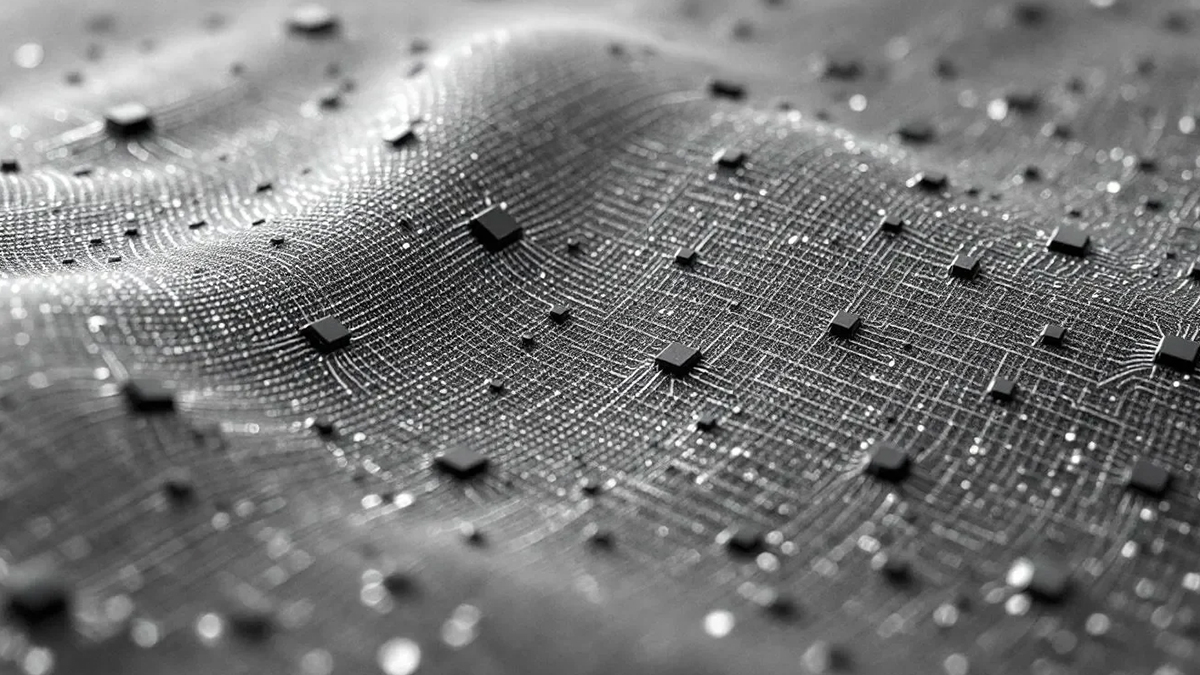
In the Philippines, the development of e-textiles is still in its early stages, but efforts to modernize the textile industry are gaining momentum. Institutions such as the Department of Science and Technology–Philippine Textile Research Institute (DOST-PTRI) are working to strengthen the country’s textile innovation ecosystem through research, training, and regional technology hubs. Recent programs aim to advance textile science, explore smart textile finishing, and encourage collaboration among government, industry, and academia.
While the Philippines is better known for natural fibers such as abaca, piña, and banana fiber, these materials may also present opportunities for future smart textile development, particularly in sustainable and tropical fabric technologies. Although the country is not yet a global leader in e-textile manufacturing, its rich textile heritage and growing innovation initiatives suggest that it could carve out a niche in the next generation of wearable technology.
Smart Clothing Already in Action

Several products already illustrate the potential of e-textiles worldwide. The Hexoskin Smart Shirt embeds sensors that monitor heart rate, respiration, and movement, transmitting the data to devices for fitness or medical analysis. Google and Levi’s Jacquard Jacket integrates conductive yarns into denim, allowing users to control music, calls, or navigation through sleeve gestures. Xenoma’s e-Skin Shirt converts body movements into data that can be used in virtual reality applications, physical therapy, and athletic performance. Meanwhile, CuteCircuit produces LED-embedded garments that illuminate or change patterns in response to digital input or movement, merging fashion with interactive technology.
These examples show just how versatile e-textiles can be, spanning health monitoring, human-computer interaction, and expressive fashion. They also highlight the interdisciplinary nature of smart clothing, where innovation sits at the intersection of design, engineering, and function.
The Challenges of Wearable Fabrics
Despite the promise of smart garments, challenges remain. Embedded electronics complicate washing and long-term durability. Privacy concerns arise from continuous biometric monitoring, and production costs remain high, limiting accessibility. Overcoming these hurdles requires ongoing collaboration among engineers, designers, textile scientists, and policymakers.
The Future of Intelligent Clothing
By 2026, e-textiles will move from novelty to practical, multifunctional garments that merge fashion, technology, and human physiology. Clothes that think, sense, and respond are no longer futuristic fantasies but emerging realities. And with its strong textile tradition, the Philippines is well-positioned to participate in this exciting global frontier.
But as our clothes become smarter, we have to ask: Are we ready to wear technology that knows our every heartbeat, movement, and emotion? Will convenience come at the cost of privacy, or will our wardrobes become yet another means to tracking and controlling us? And in a country still building its foothold in this field, will we be left behind watching others suit up?
Words by Aljhelyn Piador
Also published in GADGETS MAGAZINE Volume 26 Issue No. 8