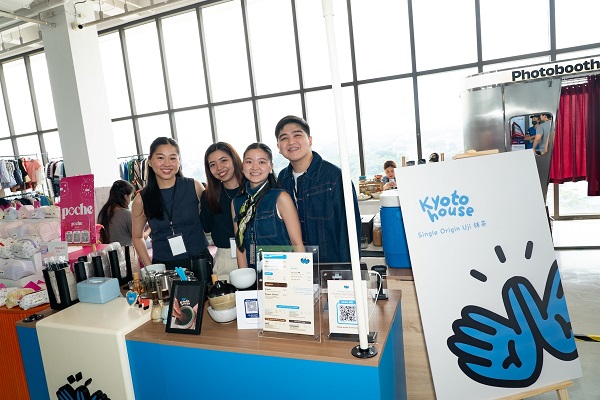

Bun Run and Kyoto House show how flexible payment tools can support businesses expanding through stores, pop-ups, and bazaars as customer payment habits evolve.
For many small and medium-sized businesses, growth no longer follows a single path. Some expand by opening new branches, while others build their customer base through pop-ups, bazaars, and online channels. As they grow, these businesses are also having to adapt to how customers want to transact, making payment flexibility an increasingly important part of day-to-day operations.
Data cited from the Bangko Sentral ng Pilipinas shows how quickly that behavior is changing. In 2025, QR Ph person-to-merchant transactions grew 246.9% in volume, reaching 183.3 million transactions from 52.8 million in 2024. Transaction value also increased 211.3%, rising to PHP926.1 billion from PHP297.5 billion the previous year.
Growth without losing the customer experience
For smash burger restaurant Bun Run, growth has meant expanding without losing the experience that made customers return in the first place. When the brand opened its second branch in Makati in October 2025, the challenge was to preserve what worked at its original San Juan location while adjusting to a different customer base.
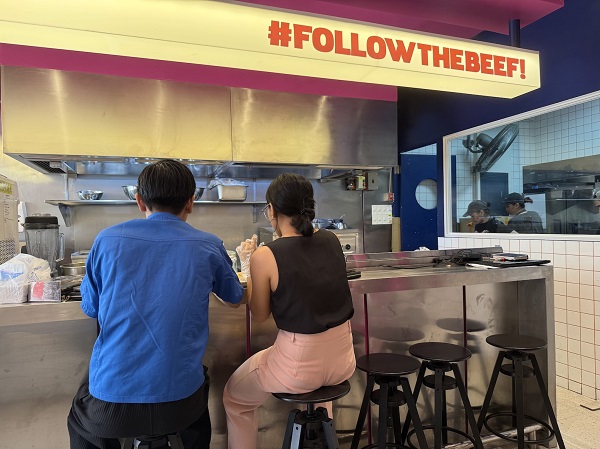
“Ultimately, we want our customers coming back for more not just because the food tastes good but because the experience was even greater,” said Chef Christine Balucas-Tabu, culinary operations director at Bun Run. She added that payment is part of that overall experience, particularly when staff need to keep transactions moving during busy periods.
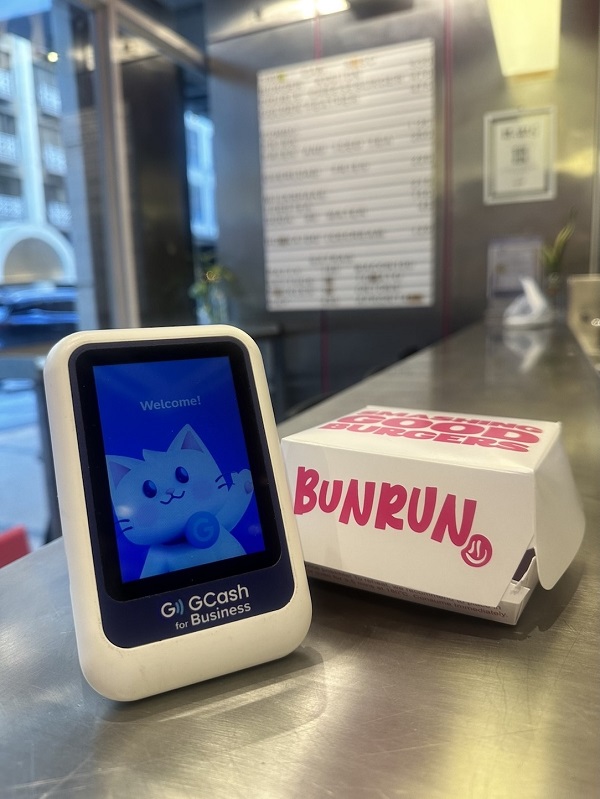
Bun Run uses GCash SoundPay Plus, a device that accepts both QR Ph and card payments and provides real-time voice confirmation. According to Balucas-Tabu, more than 80% of the restaurant’s transactions are cashless, with around 30% coming through QR Ph and 50% through debit and credit cards. Having one device that supports multiple payment methods has helped the team keep transactions more consistent during peak hours.
Meeting customers wherever they are
For Kyoto House, flexibility looks different because the business does not rely on a single permanent store. Instead, the matcha brand reaches customers through online channels, bazaars, and pop-ups, allowing it to bring its products closer to home brewers who want to prepare matcha themselves.
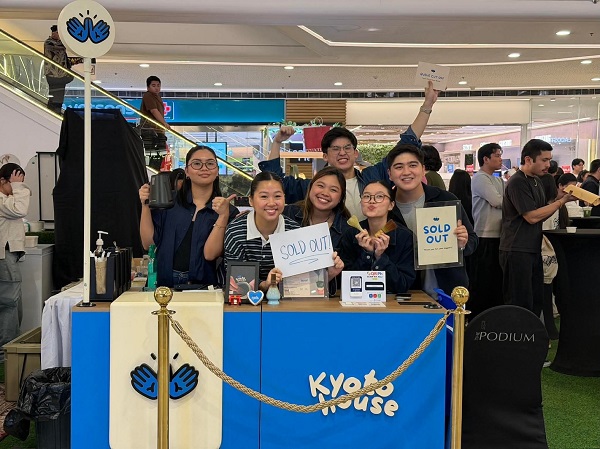
Around 40% of Kyoto House sales come from pop-ups and bazaars, according to founders Gabriel Jocson IV and Stephanie Dianne Ang. The model gives the business more opportunities to meet customers in different locations, demonstrate its products, and explain how matcha can be prepared at home.
“What should not change is the experience customers receive. Wherever we are, we want the service to feel warm, the product information to remain accurate, and the payment process to be simple and reliable,” Jocson and Ang said.
That need becomes especially important during busy weekend bazaars, where Kyoto House typically handles 300 to 450 transactions per day. The founders said 100% of those payments are cashless, making a portable solution such as GCash SoundPay Plus useful when the team is operating from temporary locations.
One device for QR Ph and card payments
GCash SoundPay Plus is designed to give merchants a single device for accepting QR Ph and card transactions. Real-time voice confirmation helps staff verify payments without repeatedly checking a separate screen or asking customers to show proof of payment.
For businesses operating during high-volume periods, that consolidation can simplify the checkout process. In Bun Run’s case, it supports a store environment where most payments are already cashless, while for Kyoto House it offers a more portable setup that can move between bazaars and pop-ups.
The source material positions the device less as a standalone technology upgrade and more as part of a broader operating system for SMEs. The value lies in giving businesses a payment setup that can adapt as their sales channels, locations, and customer preferences change.
Flexibility as a growth tool
The experiences of Bun Run and Kyoto House reflect two different approaches to expansion. One is growing through permanent branches, while the other is using temporary retail spaces and events to reach customers in more places. Both, however, depend on being able to deliver a consistent transaction experience as their operations evolve.
“For us, ease does not mean removing every challenge. It means building systems that allow us to spend less time on preventable problems and more time improving the products and serving our customers,” Jocson and Ang said.
GCash for Business positions SoundPay Plus around that same idea of operational flexibility. By supporting multiple cashless payment methods in one device, the service is intended to help SMEs keep payments from becoming a bottleneck as transaction volumes increase or as businesses move into new selling environments.
Getting started with GCash for Business
Businesses interested in using GCash SoundPay Plus can begin by creating a Starter Plan account through the GCash for Business Portal. According to the source, merchants can register using a verified GCash account, access a wallet limit of up to PHP5 million, and then order a SoundPay Plus device.
The setup is intended to give smaller businesses a relatively direct path into a more formalized cashless payment system. For SMEs that are already handling a growing share of digital transactions, the appeal is the ability to support QR Ph and card payments through a single platform as they scale.
In Summary
Bun Run and Kyoto House illustrate how different types of SMEs are adapting to changing payment behavior as cashless transactions become more common. Bun Run says more than 80% of its transactions are cashless, while Kyoto House reports that all payments at its weekend bazaars are cashless.
Both businesses use GCash SoundPay Plus, which accepts QR Ph and card payments and provides real-time voice confirmation. GCash for Business positions the device as a flexible payment tool for merchants operating across permanent branches, pop-ups, and other retail environments.