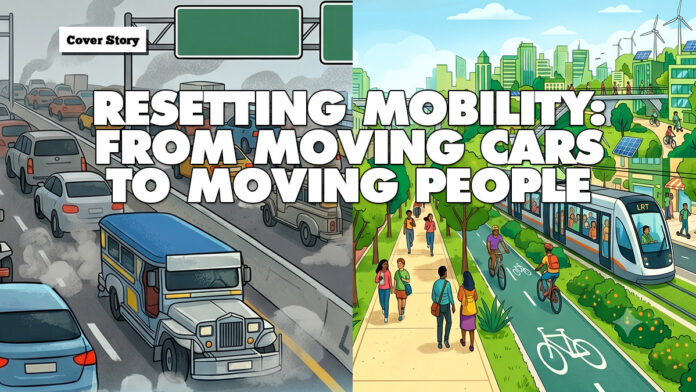

At 6:00 AM on a Monday morning, the roads within and leading to Metro Manila are already busy.
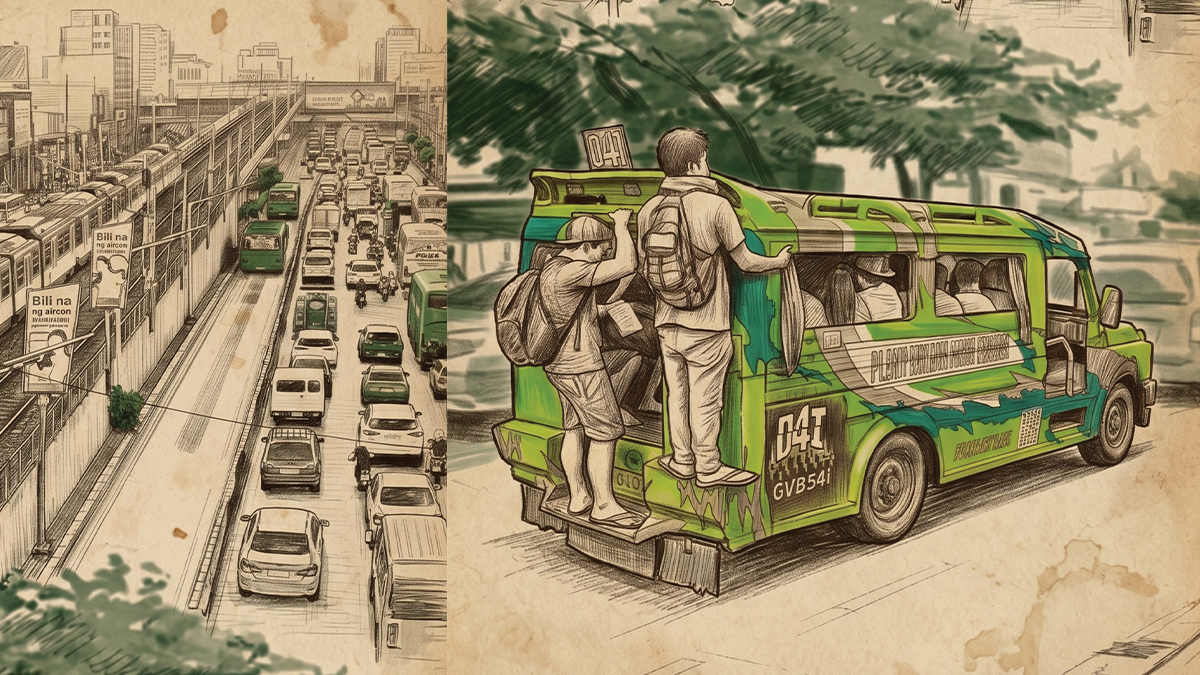
Major arteries such as Commonwealth Avenue and Aguinaldo Highway see students, workers, and other commuters cramming themselves into whatever space jeepneys and buses can spare them. Motorcycles aggressively weave in and out of lanes. Trains strain under passenger loads well beyond their intended capacity. Private cars taking the northern and southern expressways, both elevated and at-grade, find themselves stuck in the same crawl they paid a toll to avoid. Cyclists are bullied by other vehicles into giving way.
All around them, heavy equipment and construction workers continue to work on rail and road infrastructure that promises relief sometime in the future. Always sometime in the future.
The numbers provide a sense of scale to this misery. In 2017, the Japan International Cooperation Agency (JICA) estimated that Metro Manila’s traffic costs PHP3.5 billion daily. If nothing is done, the economic cost will balloon to PHP5.4 billion per day by 2035. That’s just in Metro Manila, and we’re less than a decade from that window.
This raises an uncomfortable question: if the Philippines has spent decades building roads, expanding expressways, and improving vehicles, why does mobility still feel broken?
The answer is a distinction that sounds simple and has proven difficult to act on: moving vehicles is not the same as moving people.
How We Became a Nation Built Around Cars
The Philippines did not become a car-centric country by accident. It became one by a long sequence of decisions, most of them made in the decades immediately following World War II.
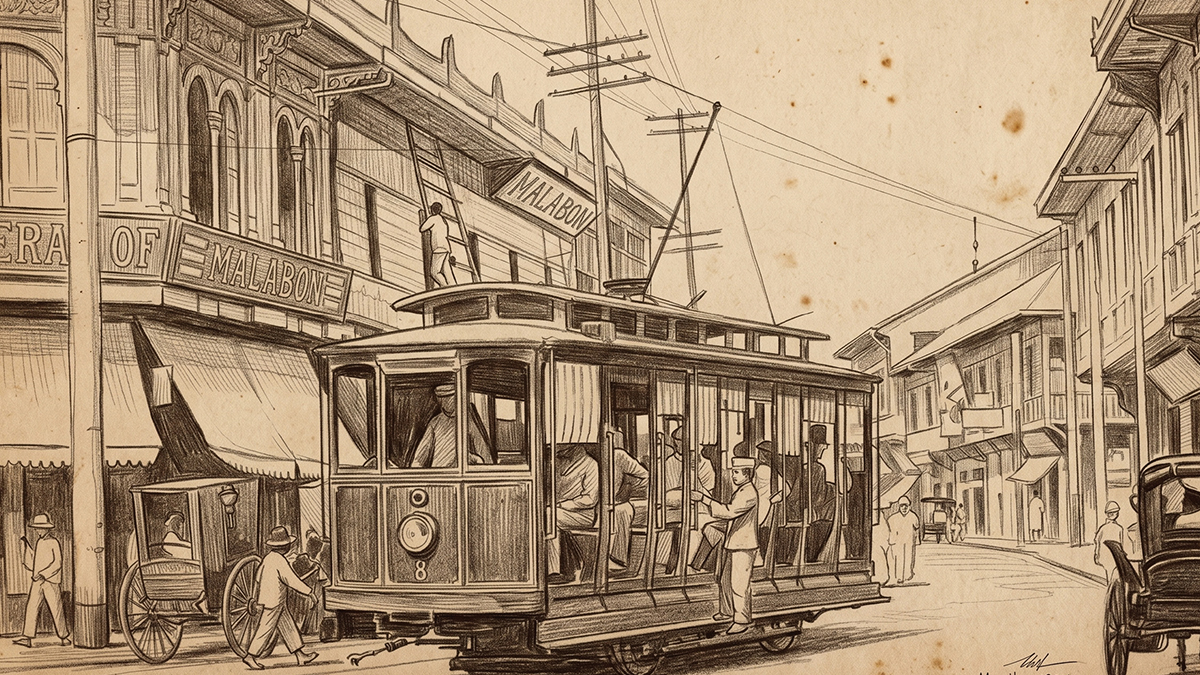
Before the war, Manila had one of the first electric tramways in Asia. The Battle of Manila in 1945 destroyed much of the rail network, and postwar reconstruction, shaped heavily by American urban planning models that were themselves being reshaped around the automobile, chose roads over rails.
What followed was a development model that organized cities around the car. Residential, commercial, and industrial zones spread outward, not along transit corridors but along roads. Distance grew, and with it the felt need for a private vehicle. Today, the National Economic and Development Authority’s Ambisyon Natin 2040—a survey of what Filipinos aspire to by that year—lists vehicle ownership among the top material goals for 77% of Filipino households. Note what this data actually says: these are aspirations, not current behaviors. What it reveals is that even Filipinos who cannot yet afford a car have internalized ownership as a marker of a comfortable life. The system created the desire that now sustains it. Looking at year-on-year sales immediately before and after the pandemic, that aspiration is already being realized, with more than 400,000 vehicles sold annually.
With the influx of vehicles, governments and private actors built additional roads. Yet the relief was often temporary. Transportation planners have a name for what happens when governments try to build their way out of congestion: induced demand. Add lanes, and vehicle use expands to fill the new capacity until everyone is back at snail speed.
The problem was never simply a shortage of roads. It was a shortage of alternatives.
Global Emergencies Exposed the Cracks
For most of those fifty years, the costs of car-centric development were felt as daily inconveniences rather than being recognized as systemic failure. Then came crisis after crisis, making structural gaps impossible to ignore.
COVID-19 arrived in 2020 and parked the motorized options most Filipinos depended on. The jeepney, the backbone of the country’s transit network, stopped running. Buses were garaged. The streets emptied. Into that space came bicycles. The National Economic Development Authority estimates that in 2021, 2.1 million bicycles were imported into the country, and cyclists reclaimed road space that was never designed for them.
Local governments, acting with the urgency that business-as-usual reforms rarely generate, installed protected bike lanes along major thoroughfares. For a brief period, cities moved differently.
It didn’t last. As restrictions eased, private vehicles returned faster than the bike lanes could hold their ground. Many of the pandemic-era lanes were quietly removed or absorbed back into traffic. The window closed.
Then came the global fuel price shocks stemming from this year’s crises in the Middle East. The Philippines, with more than 14.7 million registered internal combustion engine (ICE) vehicles compared with fewer than 61,000 electric vehicles, absorbed the shock with almost no cushion. For commuters with no viable alternative to a gasoline-powered vehicle, there was no option to pivot. They paid, or they stopped moving.
Then there’s the climate emergency. Typhoons, floods, and extreme heat routinely disrupt daily travel. Roads become impassable, commuters are stranded, and cyclists and other active mobility users face increasing exposure to dangerous heat.
The lesson from each crisis has been identical. A transportation system built around a single mode, a single fuel, a single vehicle type, and a single set of assumptions is not a transportation system. It is a vulnerability.
What a Better Mobility System Looks Like
The model that countries and cities have successfully moved toward is called multimodal mobility. The underlying idea is straightforward. A commuter’s journey rarely involves just one mode of transport. It may include a walk, a feeder service, a main transit line, and a final-mile option. The quality of that journey depends not on any single link in the chain but on how well those links connect.
This is where the Philippine system consistently breaks down: not within any one mode in isolation, but at the seams between them.
The solutions that work are not theoretical, and the best examples are not too far removed from the Philippine experience. Bogotá—a city with urban density, income distribution, and governance constraints closer to Manila’s reality—reduced private car use and improved air quality through a combination of bus rapid transit, protected cycling infrastructure, and weekly car-free streets stretching more than 100 kilometers. It did not require the kind of centralized authority that allowed Seoul to remove an elevated highway and restore a river beneath it. It required consistent policy and the political will to sustain it.
Closer to home, Iloilo, Pasig, Quezon City, Baguio, and Makati have introduced initiatives that encourage walking and cycling through car-free streets, expanded bike infrastructure, and pedestrian-friendly public spaces. Quezon City has even pioneered a free public bus system supported by a growing fleet of ICE and electric buses.
None of these initiatives solves congestion on its own. Together, however, they point toward a future in which mobility is built around giving people more transport choices rather than simply building more roads.
None of this happens quickly. The cities that have successfully reorganized how they move have done so through policy commitments that outlast individual administrations. That is perhaps the hardest obstacle to overcome: election cycles.
Technology is reshaping mobility too, though not always in the ways advocates envision. Navigation apps and adaptive traffic systems can make individual trips more efficient without reducing the number of cars on the road. Cashless payments have improved convenience across trains, buses, and jeepneys, although integration and reliability still vary between systems. EV adoption continues to grow but remains constrained by charging infrastructure outside major urban centers. The technology is arriving. The infrastructure to support it equitably still isn’t in place.
A truly multimodal transport system also makes walking, cycling, and other forms of micromobility practical, everyday choices rather than last resorts. Safe infrastructure, shaded walkways, secure parking, and end-of-trip facilities encourage more people to choose these alternatives, reducing dependence on private cars while making the transport network more resilient.
The proof? The demand is already there. A 2021 Social Weather Stations (SWS) survey found that 87% of Filipinos want the government to prioritize commuters and cyclists.
What’s Next?
There is a version of this story that ends with familiar policy recommendations: build better public transport, invest in active and micromobility infrastructure, rationalize routes, deploy integrated fare systems, and electrify the fleet. All of that is necessary. None of it will happen at the required scale without addressing the harder issue beneath the surface.
The car was never just a vehicle. In the Philippines, it became a symbol of having made it, of no longer being constrained by a public transport system that has failed generations of commuters. Changing mobility therefore means changing that story. It begins by acknowledging that the narrative we have embraced for decades—that more roads and more cars automatically mean more freedom—has cost us far more than we have been willing to admit.
Real progress will not come from moving more vehicles. It will come from moving more people, more efficiently, more sustainably, and with more choices than they have today.
Words by Chris Noel Hidalgo
Also published in GADGETS MAGAZINE Volume 26 Issue No. 11