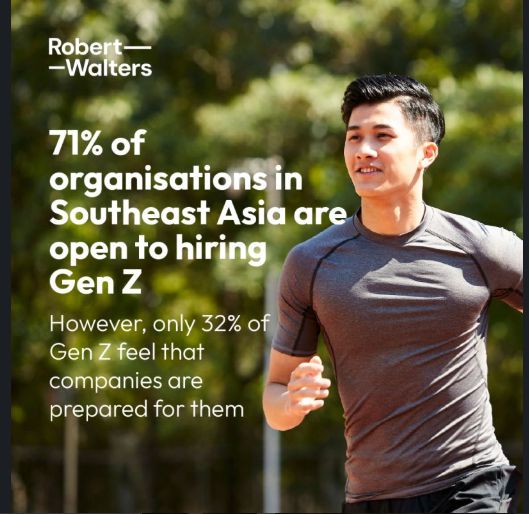

Career growth opportunities have become the biggest factor influencing whether Gen Z professionals stay with their employers, according to new research from global talent solutions partner Robert Walters.
The company’s latest findings show that 52% of Filipino Gen Z professionals cite career development as the primary reason for remaining with their current organizations, highlighting that younger employees increasingly prioritize growth and progression over long-term tenure alone.
The report also suggests that companies hoping to retain younger professionals may need to focus more heavily on mentorship, upskilling, and clearly defined advancement pathways.
Growth and mentorship matter most
Robert Walters’ 2026 Salary Survey found that 50% of Filipino businesses already use mentorship and guidance programs to attract Gen Z talent.
The company’s Gen Z e-guide also noted that many Filipino Gen Z professionals still value clear organizational structures where defined senior-junior relationships exist within the workplace.
Among respondents, 56% preferred a transformational style of leadership where mentors actively guide employees through workplace processes and expectations, compared to 34% who favored a more hands-off approach.
Kimberlyn Lu, chief executive officer at Robert Walters Southeast Asia, said Gen Z professionals are more likely to move between companies if growth opportunities are limited.
“Gen Z is not afraid to move quickly if their developmental needs are not met. They view a career as a series of challenging roles rather than a single, long-term commitment,” Lu said.
Job stability remains important
Despite being viewed as highly mobile professionals, many Gen Z workers still prioritize stability and security in uncertain market conditions.
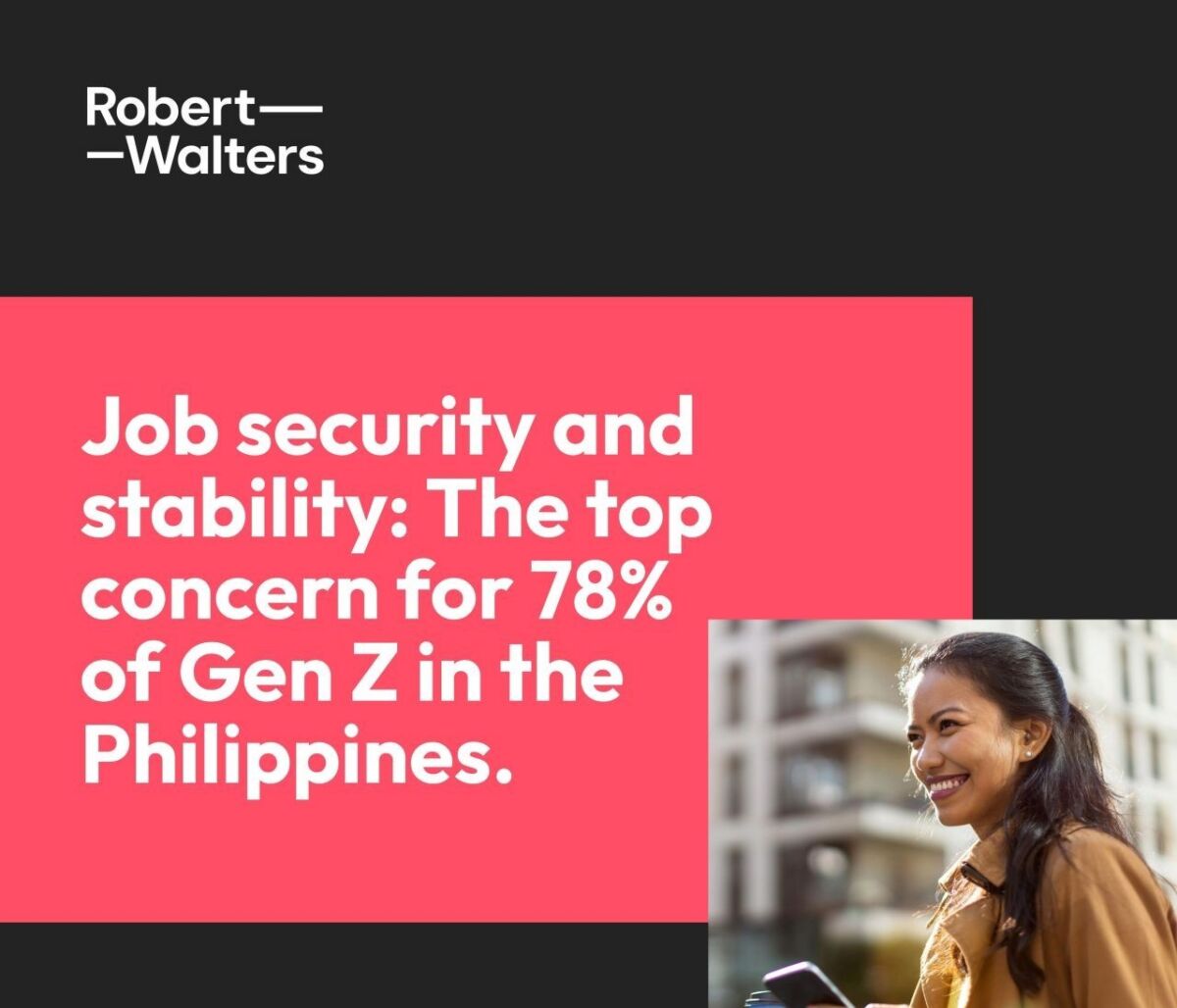
In the Philippines, 78% of Gen Z professionals cited job security and stability as important considerations in employment decisions.
Across Southeast Asia, nearly half of Gen Z professionals surveyed said they expect to stay with a company for one to two years, while 32% anticipate remaining for three to five years.
The report suggests that financially resilient companies with clear growth opportunities may have a better chance of retaining younger talent in increasingly competitive industries.
Salary transparency and workplace expectations
The research also found that Gen Z professionals are generally more open about salary discussions compared to older generations.
About 8% said they openly discuss salaries, while 26% share compensation details with close colleagues.
Robert Walters noted that retention strategies are no longer driven purely by compensation, as employees increasingly weigh job stability, mobility, mentorship, and long-term development opportunities when evaluating employers.
“To retain this dynamic generation, companies must move beyond mere salary packages and actively invest in tangible growth pathways and leaders who can genuinely inspire their teams,” Lu added.
Building long-term loyalty
The findings reinforce that workplace expectations continue to evolve as younger professionals enter the workforce in greater numbers.
For employers, this means retention strategies may need to focus less on tenure-based incentives and more on continuous development, coaching, and meaningful career progression.