
Every breath supports the moments that matter, from keeping up with a busy workday and staying active with loved ones to exercising, sleeping, and going about daily life.
Yet despite working continuously, the lungs are often taken for granted until breathing becomes difficult. Global health leaders are now calling for a broader view of lung health, recognizing that it involves not only preventing respiratory disease but also supporting physical well-being, resilience, and quality of life throughout a person’s lifetime.
Growing attention to respiratory wellness
The World Health Assembly adopted a resolution in 2025 promoting an integrated approach to lung health and recognizing healthy lungs as essential to overall well-being. This focus comes as the World Health Organization estimates that 99% of the world’s population breathes air that exceeds its recommended air-quality guidelines. The figure highlights how environmental exposure can affect respiratory health regardless of age or location.
Unlike many other parts of the body, the lungs are constantly interacting with the surrounding environment. Daily activities such as commuting through traffic, spending long hours in air-conditioned offices, being exposed to dust and changing weather, or moving through crowded public spaces require the lungs to continuously filter the air people breathe.
Although many environmental factors are outside an individual’s control, maintaining healthy lungs begins with consistent habits that support long-term respiratory wellness instead of waiting until a problem develops.
Building lung health into everyday routines
In line with National Lung Month this August, LAC Philippines is encouraging Filipinos to make lung health part of their daily wellness routine. The company recommends combining regular physical activity, balanced nutrition, quality sleep, adequate hydration, and avoiding tobacco smoke whenever possible. Nutritional support may also help maintain normal respiratory function and support the body’s natural immune defenses.
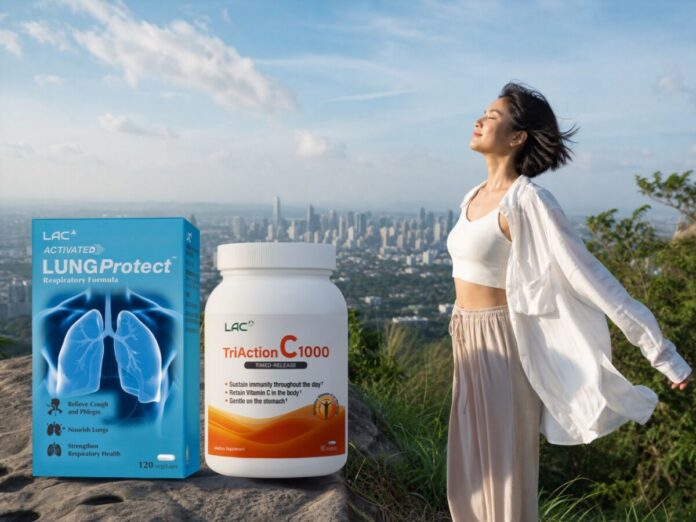
To complement these habits, LAC Philippines highlights two nutritional supplements intended to support respiratory wellness and immune health: LAC Activated Lung Protect and LAC TriAction C1000.
LAC Activated Lung Protect
LAC Activated Lung Protect contains a proprietary blend of eight Traditional Chinese Medicine herbs formulated to provide nutritional support for healthy respiratory function. Its ingredients include Radix rehmanniae, Radix ophiopogonis, and Herba menthae, which have traditionally been used to nourish and support the respiratory system.
The product is positioned for individuals regularly exposed to environmental stressors such as pollution, dust, heat, and prolonged air-conditioned environments. It is suitable for people aged nine years and older. The recommended intake is three vegetarian capsules daily for those aged nine to 18, and three capsules twice daily for adults.
LAC TriAction C1000
LAC TriAction C1000 provides 1,000mg of vitamin C through a buffered, timed-release formula designed to release the nutrient gradually while remaining gentle on the stomach. The formulation also includes alpha lipoic acid, grape seed extract, L-glutathione, and citrus bioflavonoids. According to LAC Philippines, these ingredients provide antioxidant support while helping maintain normal immune function. The supplement is intended for adults aged 18 years and older and is recommended once daily as part of a regular wellness routine.
Supporting healthier breathing habits
National Lung Month serves as a reminder that respiratory wellness is shaped by everyday choices. Although people may not always be able to control the quality of the air around them, they can take practical steps to support lung health through exercise, nutrition, hydration, sleep, and reduced exposure to tobacco smoke and other environmental stressors. Nutritional supplements may be used to complement these habits, but they should not replace a balanced diet, medical care, or professional advice when respiratory symptoms are present.